Quick Answer: The best responses to no worries depend on the situation, your relationship with the person, and the tone you want to set. You can keep it casual, show appreciation, flirt a little, or make them laugh with a clever comeback.
5 Top Alternatives: Thanks, I appreciate it!, You’re the best!, Glad we’re good!, You’re a lifesaver!, Right back at you!
When someone says “no worries,” it usually means everything is fine, so there’s no need to stress about it. You might hear it after apologizing for being late, thanking a friend for a favor, or messaging a coworker about a small mistake. It can also pop up in everyday texts, Instagram DMs, or conversations with someone you’re interested in. But even though it’s a simple phrase, you might still wonder what to say next. Should you just say thanks, make a little joke, or use it as a chance to keep the conversation going?
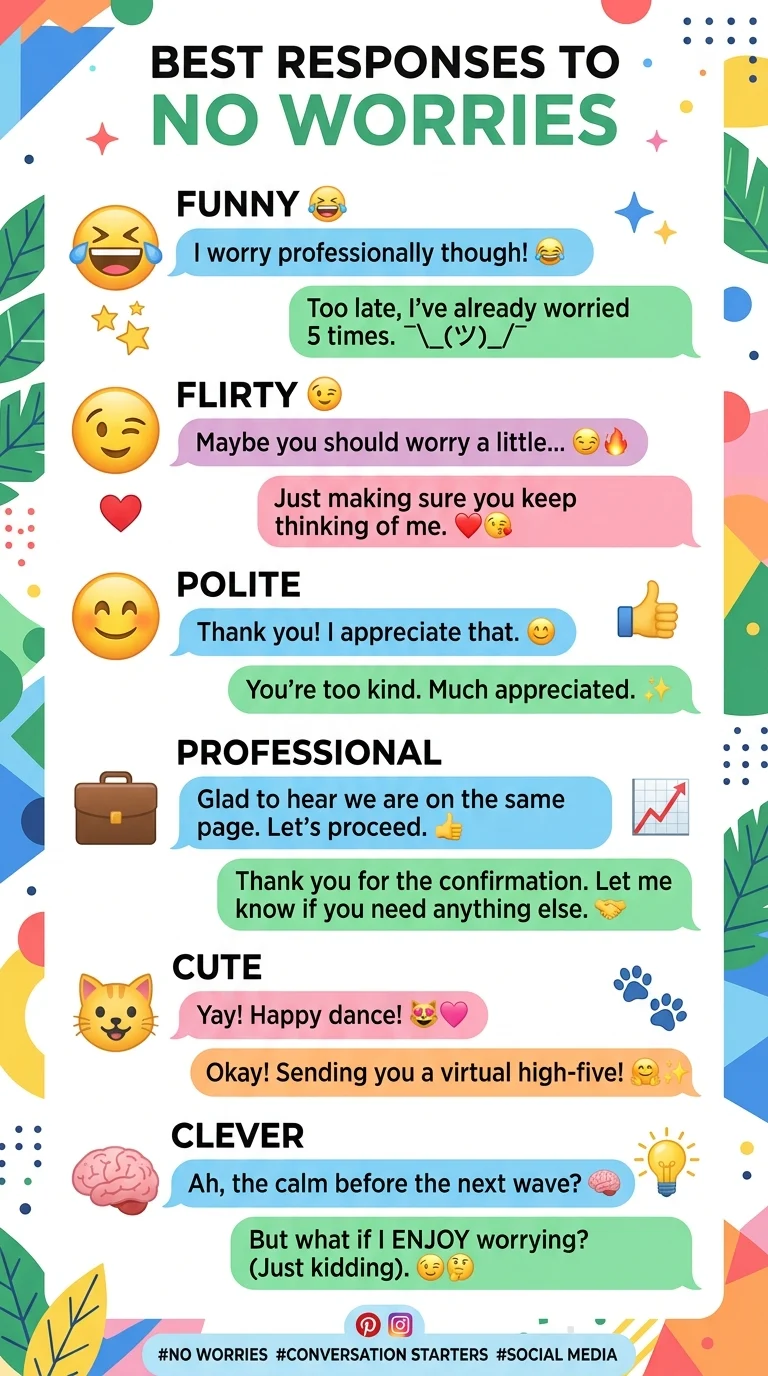
The best responses to no worries depend on the situation and the person you’re talking to. Sometimes, a quick “Thanks, I appreciate it!” feels just right. Other times, a funny comeback, a sweet reply, or a flirty message can make the exchange more interesting. You don’t need to overthink every little text, but having a few good replies ready can make conversations feel more natural and effortless. Whether you’re chatting with friends, replying to a coworker, or texting your crush, you’ll find plenty of easy, relatable responses to fit the moment.
1. Funny Responses to No Worries
Want to keep things light and make the other person smile? These funny responses add a little humor without making an ordinary exchange awkward.
- Good, because I was already worrying!
Example: Use it when a friend reassures you after a small mistake.
Meaning: It playfully admits that you were overthinking the situation. - Phew, crisis officially canceled!
Example: Send it after someone says your late reply is fine.
Meaning: It turns a minor concern into a humorous emergency. - My anxiety says thank you.
Example: Use it with a friend who knows your habit of worrying.
Meaning: It jokes about feeling relieved after reassurance. - Excellent, my stress budget is already maxed out.
Example: Try it when someone forgives a small inconvenience.
Meaning: It humorously suggests you have enough problems already. - I’ll stop preparing my apology speech now.
Example: Send it after a friend tells you not to worry.
Meaning: It makes light of how seriously you were taking the mistake. - You just saved me three business days of overthinking.
Example: Use it after someone clears up a misunderstanding.
Meaning: It exaggerates how much relief their reassurance brings. - And just like that, I can sleep tonight.
Example: Try it when a friend accepts your apology.
Meaning: It playfully celebrates the end of your worry. - My imaginary lawyer approves this message.
Example: Use it after a harmless mix-up with a close friend.
Meaning: It adds absurd humor to an ordinary situation. - Okay, panic mode has been disabled.
Example: Send it after someone reassures you about a small error.
Meaning: It signals that you’re ready to relax again. - You’re making forgiveness look suspiciously easy.
Example: Use it when a friend quickly lets something go.
Meaning: It humorously expresses surprise at their understanding. - Adding you to my emergency contact list.
Example: Try it after someone helps you out of an awkward situation.
Meaning: It playfully suggests they’re especially dependable. - Finally, a problem that didn’t require a group chat.
Example: Use it when a minor misunderstanding gets resolved.
Meaning: It jokes about how easily people can overcomplicate things.
2. Clever Responses to No Worries
A clever reply keeps the exchange smooth while adding personality. These options work when you want to sound quick-witted without trying too hard.
- Good vibes and clear communication.
Example: Use it after a friend settles a misunderstanding.
Meaning: It celebrates an easy, positive resolution. - That’s the energy I like.
Example: Send it when someone responds kindly to your apology.
Meaning: It shows appreciation for their relaxed attitude. - Problem solved, friendship preserved.
Example: Try it after a small mix-up with a friend.
Meaning: It humorously reinforces that everything is still good. - And that’s how we keep things simple.
Example: Use it when a colleague handles a minor issue calmly.
Meaning: It appreciates their practical approach. - Mutual respect, zero drama.
Example: Send it after a disagreement ends peacefully.
Meaning: It emphasizes a healthy, straightforward interaction. - Consider the matter officially closed.
Example: Use it after someone accepts your apology.
Meaning: It playfully declares the issue resolved. - A little kindness goes a long way.
Example: Try it when someone responds generously to your mistake.
Meaning: It recognizes the value of being understanding. - We’re clearly on the same wavelength.
Example: Send it when a friend understands your intentions.
Meaning: It highlights your shared understanding. - Efficiency and kindness in one package.
Example: Use it when a coworker quickly sorts out a problem.
Meaning: It compliments their helpful and easygoing nature. - That’s a refreshingly reasonable response.
Example: Try it when someone handles an awkward situation maturely.
Meaning: It appreciates their calm and sensible reaction. - No stress, just progress.
Example: Send it after resolving a small work issue.
Meaning: It encourages moving forward instead of dwelling on mistakes. - Communication: one, awkwardness: zero.
Example: Use it after clearing up an uncomfortable misunderstanding.
Meaning: It celebrates a conversation that ended well.
3. Flirty Responses to No Worries
When your crush or partner says “no worries,” you can use the moment to add a little charm. Keep the reply natural so it feels like flirting, not a rehearsed pickup line.
- You’re making it very easy to like you.
Example: Send it when your crush accepts your apology sweetly.
Meaning: It hints that their kindness is attractive to you. - You’re always this sweet, or am I special?
Example: Use it when someone you’re interested in reassures you.
Meaning: It playfully tests whether their kindness is personal. - Okay, but now I owe you a coffee.
Example: Try it after your crush helps you with something.
Meaning: It creates a casual opportunity to spend time together. - You’re kind of becoming my favorite person.
Example: Send it to someone you’ve been getting closer to.
Meaning: It communicates growing affection in a playful way. - Careful, I’ll get used to this treatment.
Example: Use it when someone is especially understanding.
Meaning: It playfully suggests you enjoy their attention. - How do you make being nice look so attractive?
Example: Try it when your crush responds warmly to your apology.
Meaning: It turns appreciation into a direct compliment. - You’re making my day a little too easily.
Example: Send it during a friendly, flirty text exchange.
Meaning: It hints that their attention has a special effect on you. - Guess I owe you some extra attention now.
Example: Use it when someone helps you out and you want to flirt.
Meaning: It suggests returning their kindness with affection. - You say no worries, and I say you’re adorable.
Example: Send it to someone who enjoys playful compliments.
Meaning: It combines gratitude with affectionate teasing. - Is being this understanding part of your charm?
Example: Use it when your crush handles a mistake gracefully.
Meaning: It compliments their personality while opening the door to flirting. - Now I have another reason to text you.
Example: Try it when a conversation with your crush is going well.
Meaning: It signals that you enjoy talking to them. - You’re making it hard not to smile at my phone.
Example: Send it during a sweet late-night conversation.
Meaning: It reveals that their messages make you happy.
4. Polite Responses to No Worries
Sometimes the best response is simple, gracious, and respectful. These replies work well with friends, acquaintances, classmates, neighbors, and anyone who has kindly reassured you.
- Thank you for understanding.
Example: Use it when someone accepts your apology.
Meaning: It expresses sincere appreciation for their patience. - I really appreciate that.
Example: Send it after someone tells you a mistake is no problem.
Meaning: It acknowledges their kindness. - That’s very kind of you.
Example: Use it when someone responds generously to an inconvenience.
Meaning: It recognizes their thoughtful attitude. - Thanks for being so understanding.
Example: Try it after you need to change plans unexpectedly.
Meaning: It appreciates their flexibility. - I’m glad we’re all good.
Example: Use it after resolving a small misunderstanding.
Meaning: It confirms that the relationship feels comfortable again. - Thanks for being so easygoing about it.
Example: Send it when a friend overlooks a minor mistake.
Meaning: It compliments their relaxed response. - I appreciate your patience.
Example: Use it when someone waits for you or accommodates a delay.
Meaning: It acknowledges the time and understanding they gave you. - That’s reassuring to hear, thank you.
Example: Try it when you’re genuinely concerned about a mistake.
Meaning: It communicates relief and gratitude. - Thanks for making it easy.
Example: Use it when someone handles an awkward situation graciously.
Meaning: It appreciates their ability to reduce tension. - I’m grateful for your understanding.
Example: Send it when someone accommodates a personal request.
Meaning: It conveys warm and sincere appreciation. - Thank you for being so considerate.
Example: Use it when someone responds kindly to an inconvenience.
Meaning: It recognizes their thoughtfulness. - I appreciate you letting it go.
Example: Try it when a friend forgives an honest mistake.
Meaning: It acknowledges their willingness to move forward.
5. Professional Responses to No Worries
In workplace conversations, you want to sound appreciative and competent without making a minor issue seem bigger than it is. These replies fit emails, team chats, meetings, and professional messages.
- Thank you for your understanding.
Example: Use it after a colleague accepts a scheduling change.
Meaning: It communicates professional gratitude. - I appreciate your flexibility.
Example: Send it when a teammate accommodates a revised deadline.
Meaning: It acknowledges their willingness to adjust. - Thanks for your patience.
Example: Use it after someone waits for a delayed update.
Meaning: It recognizes their time and cooperation. - Thank you for clarifying.
Example: Try it when a coworker resolves confusion about a task.
Meaning: It appreciates the information that helped resolve the issue. - Much appreciated.
Example: Use it in a brief workplace chat after receiving reassurance.
Meaning: It offers concise, professional thanks. - Thanks for helping keep things on track.
Example: Send it when a teammate helps resolve a small problem.
Meaning: It recognizes their contribution to the team’s progress. - I appreciate your support on this.
Example: Use it when a manager or colleague accommodates your request.
Meaning: It acknowledges their professional assistance. - Thank you for being accommodating.
Example: Try it after someone adjusts a meeting time for you.
Meaning: It expresses respect for their flexibility. - Glad we could resolve that quickly.
Example: Use it after sorting out an issue during a team discussion.
Meaning: It emphasizes an efficient, positive outcome. - Thanks for the quick response.
Example: Send it after a colleague reassures you about an urgent message.
Meaning: It appreciates their prompt communication. - I appreciate your cooperation.
Example: Use it when coordinating a shared task or deadline.
Meaning: It recognizes their willingness to work together. - Thank you. I’ll proceed accordingly.
Example: Try it when a supervisor confirms that a minor issue is settled.
Meaning: It acknowledges the response and signals your next step.
6. Casual Responses to No Worries
Not every message needs a clever comeback. These easygoing replies are perfect for everyday conversations when you want to acknowledge the other person and keep things moving.
- Thanks!
Example: Use it when a friend says your small mistake is fine.
Meaning: It expresses simple appreciation. - Appreciate it!
Example: Send it after someone reassures you in a text.
Meaning: It offers a friendly acknowledgment. - All good then!
Example: Use it when confirming that a misunderstanding is resolved.
Meaning: It signals that you’re comfortable moving on. - Cool, thanks!
Example: Try it after someone agrees to a small change in plans.
Meaning: It keeps the exchange relaxed and positive. - Glad to hear it.
Example: Use it when you’re relieved that someone isn’t upset.
Meaning: It communicates reassurance and relief. - Perfect, thank you.
Example: Send it after a friend confirms that everything is fine.
Meaning: It shows appreciation and closes the exchange neatly. - Awesome, thanks for that.
Example: Use it when a colleague or friend reassures you.
Meaning: It adds enthusiasm to a simple thank-you. - Sweet, we’re good!
Example: Try it after a minor issue between friends is resolved.
Meaning: It confirms that there’s no lingering awkwardness. - Sounds good to me.
Example: Use it when someone accepts your change of plans.
Meaning: It indicates agreement and comfort. - Thanks for being chill about it.
Example: Send it when a friend doesn’t make a big deal of your mistake.
Meaning: It appreciates their relaxed attitude. - Got you, thanks!
Example: Use it when someone reassures you in a quick chat.
Meaning: It acknowledges their message in a friendly way. - We’re all set!
Example: Try it after confirming that a small problem is sorted.
Meaning: It signals that everything is settled.
7. Cute Responses to No Worries
Want your reply to feel warm and adorable? These options add a little sweetness without making the conversation overly sentimental.
- You’re a sweetheart.
Example: Send it when a friend responds kindly to your apology.
Meaning: It gives them a warm, affectionate compliment. - Aww, thank you!
Example: Use it when someone reassures you with a kind message.
Meaning: It expresses appreciation with a soft, cheerful tone. - You’re the best, honestly.
Example: Try it when someone makes an awkward moment easier.
Meaning: It shows genuine affection and gratitude. - Sending you a little thank-you hug.
Example: Use it with a close friend who has been especially supportive.
Meaning: It conveys warmth and appreciation. - My favorite kind of energy.
Example: Send it when someone handles a mistake with kindness.
Meaning: It compliments their positive attitude. - You’re too kind to me.
Example: Try it when someone goes out of their way to reassure you.
Meaning: It expresses affectionate gratitude. - A little kindness looks good on you.
Example: Use it with a friend who enjoys cute compliments.
Meaning: It praises their thoughtful behavior. - Okay, you’re officially a gem.
Example: Send it after someone helps you with a small problem.
Meaning: It playfully calls them valuable and kind. - Thanks for having such a lovely heart.
Example: Use it when someone shows genuine understanding.
Meaning: It appreciates their caring nature. - You just made me smile.
Example: Try it when their reassuring message lifts your mood.
Meaning: It lets them know their kindness mattered. - Big thanks, little happy dance.
Example: Send it after a friend agrees to help you out.
Meaning: It turns gratitude into a cheerful, cute moment. - You’re sunshine in human form.
Example: Use it with someone who regularly makes things feel better.
Meaning: It describes them as a positive and comforting presence.
8. Sarcastic Responses to No Worries
A little sarcasm can make a conversation more entertaining when both people enjoy teasing. Keep these replies friendly enough that your joke doesn’t accidentally sound like an insult.
- Well, that was almost an inconvenience.
Example: Use it after a tiny issue gets resolved easily.
Meaning: It jokingly minimizes the whole situation. - Look at us being emotionally mature.
Example: Send it after you and a friend settle a misunderstanding.
Meaning: It pokes fun at how smoothly you handled things. - What a plot twist.
Example: Use it when you expected someone to be upset but they aren’t.
Meaning: It humorously highlights the unexpected outcome. - Amazing, nobody needs a dramatic exit.
Example: Try it after a minor disagreement ends peacefully.
Meaning: It jokes about avoiding unnecessary drama. - Well, that was surprisingly painless.
Example: Send it when someone accepts your apology immediately.
Meaning: It expresses amused relief. - A peaceful resolution? In this economy?
Example: Use it with a friend who enjoys internet-style humor.
Meaning: It treats an easy solution as an unlikely luxury. - I’ll alert the history books.
Example: Try it when a usually grumpy friend responds kindly.
Meaning: It playfully frames their reaction as a remarkable event. - Someone give this person a medal.
Example: Send it when a friend is unusually forgiving.
Meaning: It exaggerates your appreciation for their patience. - Well, there goes my apology monologue.
Example: Use it when someone reassures you before you can explain.
Meaning: It jokes about preparing an unnecessarily long apology. - Look at you, making life easy.
Example: Try it when someone handles a small inconvenience calmly.
Meaning: It offers a teasing compliment. - No drama? I wasn’t emotionally prepared for that.
Example: Use it with a friend who enjoys playful exaggeration.
Meaning: It humorously expresses surprise at the peaceful outcome. - Fine, I’ll cancel my imaginary courtroom appearance.
Example: Send it after someone tells you the mistake is no big deal.
Meaning: It turns your worry into a mock legal drama.
9. Confident Responses to No Worries
Confident replies show that you appreciate the reassurance and are comfortable moving forward. They’re useful when you want to sound self-assured without being dismissive.
- Thanks, I appreciate your understanding.
Example: Use it when someone accepts your apology at work.
Meaning: It acknowledges their response with calm confidence. - Glad we cleared that up.
Example: Send it after resolving a misunderstanding.
Meaning: It focuses on the solution rather than the problem. - Great, let’s move forward.
Example: Use it after a colleague confirms that everything is fine.
Meaning: It signals readiness to continue. - Thanks for being straightforward about it.
Example: Try it when someone communicates clearly about a mistake.
Meaning: It appreciates honest, direct communication. - Good to know we’re on the same page.
Example: Use it after confirming expectations with a teammate.
Meaning: It emphasizes mutual understanding. - I appreciate that. We’re good.
Example: Send it when a friend reassures you after an awkward moment.
Meaning: It expresses gratitude while confidently closing the issue. - Thanks for keeping things in perspective.
Example: Try it when someone helps you stop worrying about a minor problem.
Meaning: It recognizes their balanced outlook. - That’s settled, then.
Example: Use it after reaching agreement on a small issue.
Meaning: It communicates closure without overexplaining. - I appreciate the grace.
Example: Send it when someone forgives an honest mistake.
Meaning: It acknowledges their generosity and maturity. - Thanks, I won’t let it become a bigger issue.
Example: Use it when someone accepts your apology about a minor error.
Meaning: It combines appreciation with a responsible attitude. - Good, we’re moving in the right direction.
Example: Try it when a team resolves a small setback.
Meaning: It emphasizes progress and cooperation. - Thanks for understanding. I’ll take it from here.
Example: Use it when a coworker reassures you about a task.
Meaning: It expresses gratitude while showing ownership.
10. Sweet Responses to No Worries
When someone is especially thoughtful, a sweet response can make them feel appreciated. These replies work for close friends, family members, partners, and people who consistently show you kindness.
- Thank you for making me feel better.
Example: Use it when someone reassures you after you’ve been worrying.
Meaning: It acknowledges the comfort their words provided. - I appreciate your kind heart.
Example: Send it after someone responds patiently to your mistake.
Meaning: It recognizes their caring nature. - That means more than you know.
Example: Use it when reassurance arrives at a difficult moment.
Meaning: It communicates deeper gratitude. - Thank you for being so gentle with me.
Example: Try it when someone responds compassionately to your concern.
Meaning: It expresses appreciation for their sensitivity. - I’m lucky to have someone so understanding.
Example: Send it to a close friend or partner who supports you.
Meaning: It conveys affection and gratitude for the relationship. - You always know how to put me at ease.
Example: Use it when someone helps you stop overthinking.
Meaning: It praises their ability to comfort you. - Your kindness never goes unnoticed.
Example: Try it when someone repeatedly shows you consideration.
Meaning: It assures them that you recognize their efforts. - Thanks for making a hard moment feel lighter.
Example: Send it after someone reassures you during a stressful day.
Meaning: It acknowledges their emotional support. - I hope I can return that kindness someday.
Example: Use it when someone goes out of their way to help.
Meaning: It expresses a desire to reciprocate their generosity. - You make it easy to be honest with you.
Example: Try it when someone responds well to your apology.
Meaning: It appreciates the trust and comfort they create. - Thank you for seeing the good in me.
Example: Send it when someone forgives an unintentional mistake.
Meaning: It recognizes their willingness to understand your intentions. - I’ll remember how kind you were about this.
Example: Use it when someone gives you grace during an awkward situation.
Meaning: It shows that their kindness has left a lasting impression.
11. Emotional Responses to No Worries
Sometimes “no worries” comes after a conversation that means more than a simple apology. These replies help you acknowledge reassurance when you’re feeling vulnerable, relieved, or genuinely grateful.
- Thank you. I was really worried about that.
Example: Use it after someone reassures you about an important misunderstanding.
Meaning: It honestly communicates your relief. - That takes a weight off my shoulders.
Example: Send it when someone tells you a mistake hasn’t caused a problem.
Meaning: It expresses the release of built-up stress. - I’m glad I didn’t upset you.
Example: Use it when you were concerned about hurting someone’s feelings.
Meaning: It shows that their emotions matter to you. - I really needed to hear that.
Example: Try it when you’ve been anxious about how someone feels.
Meaning: It acknowledges the reassurance’s emotional importance. - Thank you for giving me some peace of mind.
Example: Send it after a serious concern has been resolved.
Meaning: It conveys deep relief and appreciation. - I was overthinking it, wasn’t I?
Example: Use it when a friend helps you see that a problem is minor.
Meaning: It admits uncertainty with a little self-awareness. - I’m grateful we can talk things through.
Example: Try it after a meaningful conversation with someone close.
Meaning: It values open communication and mutual understanding. - Your understanding really helps.
Example: Send it when someone is patient during a difficult moment.
Meaning: It acknowledges the support they provide. - I feel much better now, thank you.
Example: Use it when reassurance genuinely calms you down.
Meaning: It shares your relief directly. - I appreciate you not jumping to conclusions.
Example: Try it when someone listens before judging a misunderstanding.
Meaning: It recognizes their fairness and patience. - Thank you for making room for an honest mistake.
Example: Send it after someone responds compassionately to an error.
Meaning: It appreciates their willingness to be understanding. - I’m glad we’re okay. That matters to me.
Example: Use it when preserving a relationship is important to you.
Meaning: It expresses sincere care and emotional reassurance.
12. Creative Responses to No Worries
If you want a reply that stands out without sounding forced, try one of these imaginative lines. They’re especially good for playful texts and conversations with people who appreciate a little originality.
- Worry levels: officially at zero.
Example: Use it after someone tells you everything is fine.
Meaning: It playfully announces that you’ve relaxed. - The clouds have cleared.
Example: Send it after resolving an awkward misunderstanding.
Meaning: It compares emotional relief to better weather. - Peace has entered the chat.
Example: Use it when a group conversation settles down.
Meaning: It humorously celebrates a calmer mood. - And the universe remains in balance.
Example: Try it when a tiny problem is quickly fixed.
Meaning: It makes an ordinary resolution sound wonderfully cosmic. - Crisis management team, we did it.
Example: Send it after you and a friend sort out a mix-up.
Meaning: It celebrates teamwork through playful exaggeration. - My inner alarm clock can finally snooze.
Example: Use it after someone clears up a concern.
Meaning: It describes the relief of no longer feeling on edge. - A plot twist with a happy ending.
Example: Try it when you expected a problem but got reassurance instead.
Meaning: It frames the situation as a pleasant surprise. - The awkwardness has left the building.
Example: Send it after an uncomfortable exchange ends well.
Meaning: It celebrates the return of a relaxed atmosphere. - Adding this kindness to my mental scrapbook.
Example: Use it when someone responds especially thoughtfully.
Meaning: It suggests you’ll remember the moment fondly. - We have successfully landed on the island of chill.
Example: Try it after a small disagreement is resolved.
Meaning: It turns the return to calm into a playful adventure. - The apology department thanks you for your patience.
Example: Send it after someone accepts your apology.
Meaning: It adds a mock-official twist to your gratitude. - A peaceful ending deserves a little celebration.
Example: Use it after a difficult conversation goes well.
Meaning: It recognizes the value of resolving things kindly.
13. Short Responses to No Worries
Sometimes you’re busy, texting on the go, or simply don’t want to overthink your next message. These short replies are easy to send and sound natural in everyday conversations.
- Thanks!
Example: Use it after a quick reassurance from a friend.
Meaning: It expresses straightforward gratitude. - Appreciate you!
Example: Send it when someone helps you out.
Meaning: It acknowledges their kindness warmly. - All good!
Example: Use it when a minor issue has been settled.
Meaning: It signals that everything is fine. - Perfect!
Example: Try it after someone confirms there’s no problem.
Meaning: It shows satisfaction and relief. - You’re awesome!
Example: Send it when someone is especially helpful.
Meaning: It gives a quick, friendly compliment. - Much love!
Example: Use it with a close friend who reassures you.
Meaning: It expresses warmth and affection. - We’re good!
Example: Try it after a misunderstanding between friends.
Meaning: It confirms that things are okay. - Cheers!
Example: Use it in a casual exchange after receiving help.
Meaning: It provides a relaxed acknowledgment. - Thanks a bunch!
Example: Send it after someone is patient with you.
Meaning: It adds extra warmth to your gratitude. - No stress!
Example: Try it when you want to reassure the other person too.
Meaning: It communicates that the situation is not a problem for you. - You’re a star!
Example: Use it when a friend makes things easier.
Meaning: It offers a cheerful compliment. - Glad we’re good!
Example: Send it after someone accepts your apology.
Meaning: It confirms that you’re happy to move on.
14. Responses to No Worries From Your Crush
When your crush says “no worries,” the context matters. They might simply be polite, or they might be creating space for a comfortable conversation. These replies keep things friendly without assuming every kind message is romantic.
- Thanks, you’re really easy to talk to.
Example: Use it when your crush responds kindly to a mistake.
Meaning: It compliments the comfort you feel around them. - You’re making a pretty good impression.
Example: Send it during a playful conversation with someone you like.
Meaning: It hints at interest without being too direct. - I owe you a coffee for that.
Example: Try it when your crush helps you with something.
Meaning: It creates an easy opening for a casual invitation. - You’re sweet for saying that.
Example: Use it when your crush reassures you warmly.
Meaning: It shows appreciation while keeping the tone affectionate. - Thanks, I was hoping you’d say that.
Example: Send it when you were nervous about their reaction.
Meaning: It reveals relief and a little playful vulnerability. - Okay, you’ve officially made me smile.
Example: Try it when their message brightens your day.
Meaning: It lets them know their kindness had an effect. - You’re good at making awkward moments less awkward.
Example: Use it when they handle a misunderstanding gracefully.
Meaning: It compliments their social ease. - Now I feel like I can actually relax around you.
Example: Send it when you’re becoming more comfortable with your crush.
Meaning: It communicates growing trust. - Is it too early to say I appreciate you?
Example: Try it during a warm, playful exchange.
Meaning: It expresses interest while keeping the mood light. - You’re making this whole conversation way too enjoyable.
Example: Use it when your texting chemistry feels natural.
Meaning: It suggests you genuinely enjoy talking to them. - Thanks, I’ll try not to make a habit of apologizing.
Example: Send it after your crush reassures you about a tiny mistake.
Meaning: It combines self-aware humor with a relaxed tone. - Well, now I have an excuse to keep talking to you.
Example: Use it when you want to extend a conversation naturally.
Meaning: It playfully reveals that you want to keep connecting.
15. Responses to No Worries When You Don’t Mean It
Sometimes someone says “no worries,” but you can tell the situation still needs attention. If you genuinely caused an inconvenience, acknowledge their kindness without pretending the issue never happened.
- Thanks for understanding. I’ll make sure it doesn’t happen again.
Example: Use it after missing an important deadline.
Meaning: It combines gratitude with accountability. - I appreciate that, and I’m sorry for the inconvenience.
Example: Send it when your mistake affected someone’s plans.
Meaning: It acknowledges their reassurance while recognizing the impact. - Thank you. I still want to make this right.
Example: Use it when someone forgives you but a practical problem remains.
Meaning: It shows that you care about fixing the situation. - I appreciate your patience. Let me take care of the issue.
Example: Try it when a coworker overlooks an error that needs correction.
Meaning: It expresses gratitude and takes responsibility. - Thanks for being understanding. I know that caused extra work.
Example: Send it when your mistake creates additional tasks for someone.
Meaning: It recognizes the real consequences of your actions. - I’m grateful you’re being kind about it.
Example: Use it when someone responds gently despite a genuine inconvenience.
Meaning: It acknowledges their patience without dismissing the issue. - Thank you. I’ll follow through on what I promised.
Example: Try it after you need to reassure someone about a delayed task.
Meaning: It reinforces your commitment to taking action. - I appreciate you saying that, and I take responsibility.
Example: Use it when your mistake needs a sincere acknowledgment.
Meaning: It combines appreciation with accountability. - Thanks. Please let me know if there’s anything I should fix.
Example: Send it after a colleague accepts an error that affected their work.
Meaning: It invites practical feedback and offers help. - I won’t take your understanding for granted.
Example: Use it when someone has been especially patient with you.
Meaning: It assures them that you value their kindness. - Thank you for letting me explain. I’ll do better next time.
Example: Try it after discussing a mistake with someone close.
Meaning: It acknowledges their patience and your intention to improve. - I appreciate it. Let’s make sure everything is sorted out.
Example: Use it when reassurance is welcome but follow-up is still necessary.
Meaning: It keeps the conversation constructive and solution-focused.
FAQs
What does “no worries” mean?
It usually means “it’s okay,” “don’t worry about it,” or “there’s no problem.”
What is the best reply to “no worries”?
“Thanks, I appreciate it!” is a friendly, natural response for most everyday situations.
Is “no worries” flirty?
It can be, but it’s usually casual reassurance. Look at the wider conversation for clues.
How do you respond to “no worries” professionally?
Say “Thank you for your understanding” or “I appreciate your flexibility.”
What if you don’t actually mean “no worries”?
Be honest and kind. Say you appreciate their response while explaining what still needs attention.
Is it okay to reply with humor?
Yes, if you know the person enjoys jokes and the situation isn’t serious or sensitive.
Should I respond to “no worries” every time?
Not necessarily. A quick thank-you, emoji, or natural end to the conversation is often enough.
Is “you’re the best” a good response?
Yes, especially when a friend or colleague has been helpful and understanding.
How do you respond when your crush says “no worries”?
Try “You’re really easy to talk to” or “Thanks, you just made me smile.”
Can I say “no problem” back?
Yes. It’s a natural, casual way to acknowledge their reassurance and keep the exchange relaxed.
Conclusion
The best responses to no worries aren’t always the funniest or most clever ones. They’re the replies that fit the moment and make the other person feel comfortable. A simple “thanks” works perfectly in everyday conversations, a playful comeback can make your friends laugh, and a thoughtful message can strengthen a meaningful connection.
At work, a professional acknowledgment shows respect, while a flirty response can add a little spark when the timing feels right. Choose words that sound like you, and don’t feel pressured to turn every message into a perfect performance. Save this list for your next text, share your favorite reply with a friend, and keep your conversations warm, confident, and naturally fun.