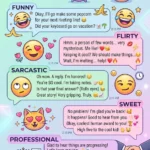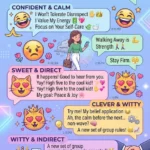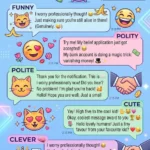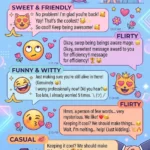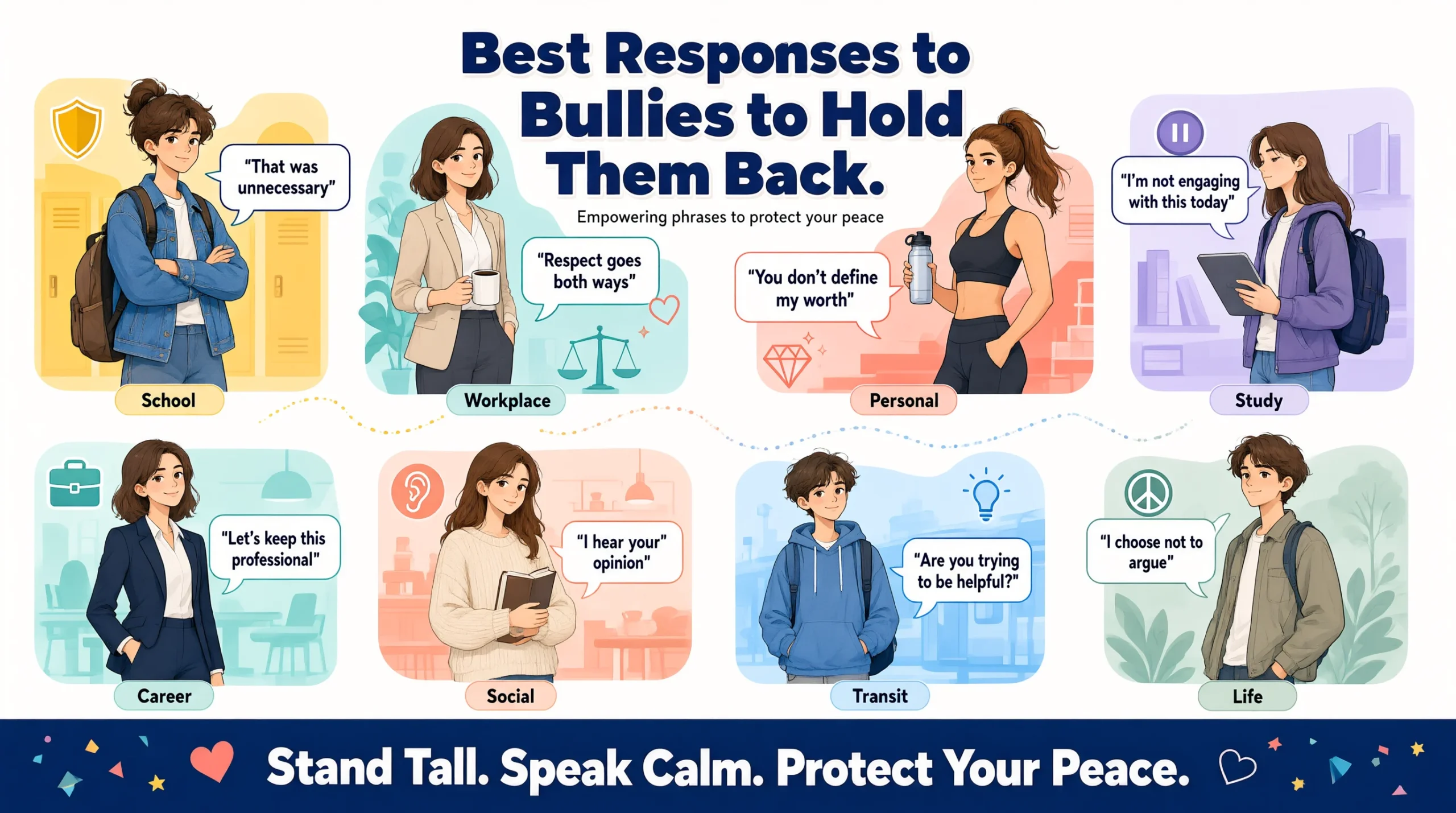
Quick Answer: The best responses to bullies to hold them back are calm, confident, and firm without turning the situation into a bigger fight. A short, clever reply can help you set boundaries, protect your dignity, and show that disrespect is not acceptable.
Top responses: “That was unnecessary,” “You don’t get to talk to me like that,” “Your opinion doesn’t define me,” “I’m not interested in your drama,” “Try being respectful for once.”
Looking for the best responses to bullies to hold them back without sounding rude or starting an argument? Whether someone makes fun of you at school, throws shade in front of your friends, disrespects you at work, or leaves a nasty comment in your DMs, knowing what to say can help you stand up for yourself with confidence. The hardest part is often finding the right words in the moment, especially when you’re caught off guard and the perfect comeback only comes to mind hours later!
The good news? You don’t need to insult someone back to make your point. The right response can shut down rude comments, set clear boundaries, and show that you won’t tolerate disrespect. From funny comebacks and clever one-liners to calm, confident, and professional replies, these best responses to bullies to hold them back will help you handle different situations without losing your cool. Because sometimes, the strongest comeback is knowing your worth and refusing to let anyone make you feel small.
1. Funny Responses to Bullies
Sometimes, a little humor can take the sting out of an insult without turning the situation into an argument. Use these responses when you feel safe and want to keep things light.
- Did you practice that one in the mirror?
Example: When someone delivers a rehearsed-sounding insult in front of friends.
Meaning: You are pointing out how forced their comment sounds. - Was that supposed to hurt my feelings?
Example: When someone makes a weak attempt to embarrass you.
Meaning: You are showing that their insult has not impressed you. - Thanks for the unwanted commentary.
Example: When someone gives a rude opinion about your appearance or choices.
Meaning: You are dismissing their unnecessary input with humor. - Someone woke up and chose bad manners.
Example: When a friend or classmate makes an unexpectedly rude remark.
Meaning: You are calling out their behavior without launching a personal attack. - I’ll give that insult a two out of ten.
Example: When a bully tries a predictable joke at your expense.
Meaning: You are suggesting their attempt to provoke you has fallen flat. - Your comedy career is off to a rough start.
Example: When someone disguises an insult as a joke.
Meaning: You are making it clear that their humor is not landing. - Did your manners take the day off?
Example: When someone speaks disrespectfully during a group conversation.
Meaning: You are highlighting their lack of courtesy in a playful way. - That comment needed a better editor.
Example: When someone makes a particularly awkward or unnecessary remark.
Meaning: You are criticizing the comment rather than attacking the person. - I’m going to pretend that made sense.
Example: When someone tries to provoke you with a pointless insult.
Meaning: You are refusing to take their remark seriously. - Your filter must be on vacation.
Example: When someone says something rude without thinking.
Meaning: You are pointing out their poor judgment with light sarcasm. - And that was your best material?
Example: When a bully repeats an old insult.
Meaning: You are showing that their attempt to upset you feels unoriginal. - Let’s give that comment a moment of silence.
Example: When a rude remark falls flat in a group.
Meaning: You are using humor to take away its impact.
2. Brutal but Respectful Responses to Bullies
A strong comeback does not need cruelty to make its point. These replies are direct enough to challenge disrespect while keeping your own behavior in check.
- Your opinion is not my identity.
Example: When someone repeatedly criticizes your personality or appearance.
Meaning: You are separating your self-worth from their judgment. - You can insult me, but you cannot define me.
Example: When a bully tries to make you feel inferior.
Meaning: You are protecting your confidence from their words. - Being rude doesn’t make you powerful.
Example: When someone acts superior by putting others down.
Meaning: You are challenging the idea that disrespect equals strength. - I see your behavior, and I won’t accept it.
Example: When someone repeatedly crosses your boundaries.
Meaning: You are clearly refusing to tolerate mistreatment. - If respect is too much to ask, this conversation is over.
Example: When someone continues insulting you after being warned.
Meaning: You are setting a firm limit on the interaction. - You don’t have to like me, but you do have to respect me.
Example: When a classmate or coworker openly dislikes you.
Meaning: You are distinguishing personal opinions from basic respect. - Your words say more about your choices than my worth.
Example: When someone makes a personal attack.
Meaning: You are refusing to internalize their negativity. - I’m not here to earn your approval.
Example: When a bully keeps judging your decisions.
Meaning: You are asserting your independence and self-confidence. - You can disagree without being disrespectful.
Example: When someone turns a disagreement into an insult.
Meaning: You are demanding a more mature conversation. - I won’t lower my standards to match your behavior.
Example: When someone tries to draw you into a verbal fight.
Meaning: You are choosing dignity over retaliation. - Your disrespect doesn’t deserve my attention.
Example: When a person keeps making provocative remarks.
Meaning: You are choosing not to reward their behavior with engagement. - I’m done accepting behavior you refuse to correct.
Example: When someone repeatedly ignores your requests to stop.
Meaning: You are making your boundary clear and serious.
3. Confident Responses to Bullies
Confidence can help you communicate that you deserve respect, even when someone is trying to make you doubt yourself.
- I know who I am, and I’m comfortable with that.
Example: When someone mocks your personality or interests.
Meaning: You are expressing confidence in your identity. - I’m not ashamed of being myself.
Example: When a bully criticizes your appearance, hobbies, or style.
Meaning: You are refusing to hide your individuality. - I deserve the same respect as everyone else.
Example: When someone treats you as though you are less important.
Meaning: You are affirming your equal worth. - I can handle criticism, but not disrespect.
Example: When someone claims an insult is simply honest feedback.
Meaning: You are distinguishing useful criticism from mistreatment. - I’m comfortable standing up for myself.
Example: When someone expects you to stay silent after an insult.
Meaning: You are showing that you can defend your boundaries. - You don’t get to decide what I’m worth.
Example: When someone tries to damage your self-esteem.
Meaning: You are keeping control of how you see yourself. - I won’t apologize for being different.
Example: When a bully makes fun of your choices or interests.
Meaning: You are embracing your individuality. - I can be kind and still be firm.
Example: When you want to address rude behavior without becoming rude yourself.
Meaning: You are demonstrating strength through respectful communication. - I trust myself enough not to take that personally.
Example: When someone makes an unnecessary judgment about you.
Meaning: You are showing emotional independence. - I know my value, even when you don’t.
Example: When a bully repeatedly tries to make you feel insignificant.
Meaning: You are reminding yourself that your worth is not decided by others. - I won’t let your attitude change how I treat myself.
Example: When someone’s negativity begins to affect your confidence.
Meaning: You are protecting your self-respect. - I can walk away without feeling defeated.
Example: When a conversation becomes hostile and unproductive.
Meaning: You are recognizing that leaving can be a confident choice.
4. Sarcastic Responses to Bullies
A measured dose of sarcasm can expose an unnecessary insult without making the disagreement more personal. Use these when the situation is safe and the tone suits the moment.
- What a fascinating contribution to absolutely nothing.
Example: When someone interrupts with an irrelevant insult.
Meaning: You are pointing out that their comment adds no value. - I’ll file that under things I didn’t ask for.
Example: When someone gives you an unsolicited negative opinion.
Meaning: You are dismissing their unwanted commentary. - Your approval must be in very high demand.
Example: When someone acts as though everyone needs their validation.
Meaning: You are challenging their sense of importance. - That’s certainly one way to embarrass yourself.
Example: When someone makes a rude comment in front of a group.
Meaning: You are suggesting their behavior reflects poorly on them. - I see kindness isn’t your favorite hobby.
Example: When someone repeatedly makes unnecessary digs at others.
Meaning: You are calling attention to their unkindness. - What would I do without your unsolicited opinion?
Example: When someone criticizes your choices without being asked.
Meaning: You are highlighting the unwanted nature of their advice. - Your enthusiasm for judging people is impressive.
Example: When someone constantly comments on other people’s lives.
Meaning: You are pointing out their habit of being judgmental. - That was a lot of confidence for such a weak argument.
Example: When someone delivers an insult as if it proves a point.
Meaning: You are questioning the quality of their reasoning. - I didn’t realize my life needed your review.
Example: When someone criticizes your personal decisions.
Meaning: You are reminding them that your life is not theirs to manage. - Congratulations on making that unnecessarily personal.
Example: When a disagreement suddenly becomes an attack.
Meaning: You are calling out their decision to cross a line. - I’ll consider that when I start asking for advice.
Example: When someone offers criticism you never requested.
Meaning: You are setting a sarcastic boundary around unwanted opinions. - Let’s keep the conversation at a respectful level.
Example: When you want to stop sarcasm from turning into a fight.
Meaning: You are redirecting the exchange toward basic courtesy.
5. Polite Responses to Bullies
You can be polite without allowing someone to walk all over you. These replies are useful when you want to maintain your composure and make your expectations clear.
- I’d appreciate it if you spoke to me respectfully.
Example: When a colleague or classmate makes a rude remark.
Meaning: You are requesting respectful treatment directly. - I understand your opinion, but I disagree with your delivery.
Example: When someone expresses criticism in a hurtful way.
Meaning: You are addressing their tone without dismissing every point. - Let’s keep this conversation respectful.
Example: When a discussion starts becoming insulting.
Meaning: You are encouraging a healthier exchange. - I’m happy to talk when we’re both being respectful.
Example: When someone refuses to discuss an issue calmly.
Meaning: You are making respectful communication a condition of continuing. - That comment was unnecessary.
Example: When someone makes an insulting joke at your expense.
Meaning: You are calmly identifying the problem. - Please don’t make personal remarks about me.
Example: When someone repeatedly criticizes your appearance or private life.
Meaning: You are setting a clear personal boundary. - We can disagree without making this personal.
Example: When a debate turns into name-calling.
Meaning: You are asking the other person to focus on the issue. - I’d prefer a more constructive conversation.
Example: When someone offers only negative comments about your work.
Meaning: You are inviting useful feedback instead of insults. - I don’t think that was a fair thing to say.
Example: When someone misrepresents you in front of others.
Meaning: You are calmly challenging an unfair remark. - Please give me the same courtesy you’d expect from me.
Example: When someone demands respect but refuses to offer it.
Meaning: You are asking for mutual consideration. - I’m going to step away from this conversation now.
Example: When a discussion becomes disrespectful despite your efforts.
Meaning: You are ending the interaction without escalating it. - I hope we can speak more respectfully next time.
Example: When you want to end a tense interaction on a composed note.
Meaning: You are expressing an expectation for better behavior in the future.
6. Professional Responses to Bullies at Work
Workplace bullying can affect your confidence, productivity, and peace of mind. These responses help you address inappropriate behavior while keeping the conversation professional.
- Let’s keep our discussion focused on the work.
Example: When a coworker turns a project discussion into personal criticism.
Meaning: You are redirecting attention to the professional issue. - I’m open to feedback when it’s delivered constructively.
Example: When a colleague criticizes your performance disrespectfully.
Meaning: You are showing that you welcome useful feedback but not personal attacks. - Please address the issue without personal comments.
Example: When a teammate insults you during a meeting.
Meaning: You are setting a clear workplace boundary. - I’d like to understand the concern without the personal remarks.
Example: When a manager or colleague expresses frustration through insults.
Meaning: You are asking for specific and respectful communication. - Let’s discuss the facts rather than make assumptions.
Example: When someone blames you without checking the details.
Meaning: You are steering the discussion toward evidence. - I expect professional communication from everyone on this team.
Example: When repeated disrespect affects team collaboration.
Meaning: You are reinforcing shared workplace standards. - That comment doesn’t help us solve the problem.
Example: When a coworker makes a mocking remark during a meeting.
Meaning: You are bringing the focus back to finding a solution. - Could you clarify the work-related concern you’re raising?
Example: When someone makes vague accusations about your performance.
Meaning: You are asking for specific information instead of engaging with insults. - I disagree with that characterization of my work.
Example: When a coworker unfairly describes your contribution.
Meaning: You are professionally challenging an inaccurate judgment. - I’d prefer to continue this discussion with a neutral tone.
Example: When a conversation becomes hostile in the office.
Meaning: You are asking to keep the exchange calm and productive. - Let’s document the agreed next steps so we’re clear.
Example: When a difficult coworker repeatedly disputes what was discussed.
Meaning: You are creating clarity and accountability. - If this continues, I’ll raise the matter through the appropriate channels.
Example: When repeated workplace bullying does not stop after you set boundaries.
Meaning: You are communicating that persistent misconduct may require formal action.
7. Responses to Bullies at School
School bullying can happen in classrooms, hallways, group chats, or social media comments. These replies help students stand up for themselves without encouraging a confrontation.
- You don’t have to like me, but leave me alone.
Example: When a classmate repeatedly targets you during the school day.
Meaning: You are setting a straightforward boundary. - I’m here to learn, not to deal with your insults.
Example: When someone distracts you with rude comments in class.
Meaning: You are making your priorities clear. - My grades and my worth aren’t yours to judge.
Example: When someone mocks your academic performance.
Meaning: You are separating your value from another student’s opinion. - That joke isn’t funny when it’s at my expense.
Example: When classmates laugh at a humiliating comment about you.
Meaning: You are explaining why the joke crosses a line. - You can stop now. It’s not okay.
Example: When someone continues teasing you after you ask them to stop.
Meaning: You are clearly stating that their behavior is unacceptable. - I’m not interested in proving myself to you.
Example: When a classmate challenges you to impress the group.
Meaning: You are refusing to seek approval from someone who mistreats you. - Let’s focus on class instead of picking on people.
Example: When someone interrupts a lesson to mock another student.
Meaning: You are redirecting attention toward a more appropriate activity. - Being different isn’t something to be ashamed of.
Example: When a bully mocks your interests or personal style.
Meaning: You are affirming individuality. - Don’t speak about me that way.
Example: When someone makes a humiliating comment in a hallway.
Meaning: You are establishing a firm boundary. - I’m not joining in with making someone feel bad.
Example: When classmates pressure you to laugh at another student.
Meaning: You are refusing to participate in bullying. - This needs to stop, and I’m getting help if it doesn’t.
Example: When repeated teasing continues despite clear requests to stop.
Meaning: You are stating that you will seek support if the behavior persists. - I deserve to feel safe at school, just like everyone else.
Example: When bullying makes you uncomfortable attending class.
Meaning: You are affirming your right to a safe learning environment.
8. Short Responses to Bullies
Sometimes, fewer words carry the strongest message. These short replies are easy to remember when you need to respond quickly.
- Not acceptable.
Example: When someone makes an insulting comment without warning.
Meaning: You are immediately rejecting the behavior. - Watch your tone.
Example: When someone speaks to you disrespectfully.
Meaning: You are asking them to change how they address you. - Enough is enough.
Example: When repeated teasing has gone too far.
Meaning: You are making it clear that the behavior must stop. - That’s out of line.
Example: When someone crosses a personal boundary.
Meaning: You are identifying their remark as inappropriate. - Try respect.
Example: When someone repeatedly chooses insults over conversation.
Meaning: You are asking them to change their approach. - I’m not engaging.
Example: When someone wants to provoke you into an argument.
Meaning: You are choosing not to participate. - Keep it respectful.
Example: When a conversation begins turning hostile.
Meaning: You are setting a simple expectation. - Move along, please.
Example: When someone continues bothering you without a valid reason.
Meaning: You are asking them to leave you alone. - That’s your problem, not my identity.
Example: When someone tries to shame you for being yourself.
Meaning: You are refusing to define yourself through their judgment. - I’m done here.
Example: When you want to end an unproductive argument.
Meaning: You are choosing to disengage. - Take a step back.
Example: When someone invades your personal space or becomes confrontational.
Meaning: You are asking for distance and room to feel safe. - No more comments, please.
Example: When someone continues making unwanted remarks.
Meaning: You are clearly asking them to stop.
9. Clever Responses to Bullies
Clever replies challenge a bully’s behavior without relying on personal insults. They are especially useful when you want to sound composed and thoughtful.
- Being loud doesn’t make you right.
Example: When someone tries to win an argument by talking over you.
Meaning: You are separating confidence from correctness. - Criticism is useful when it comes with a purpose.
Example: When someone repeatedly criticizes you without offering anything constructive.
Meaning: You are encouraging meaningful feedback rather than negativity. - You can make a point without making someone the target.
Example: When a group discussion turns into personal mockery.
Meaning: You are encouraging a more respectful way to disagree. - A disagreement isn’t an invitation to insult me.
Example: When someone attacks your character during a debate.
Meaning: You are distinguishing disagreement from personal abuse. - If there’s a real issue, let’s address it directly.
Example: When someone makes passive-aggressive remarks instead of explaining a concern.
Meaning: You are asking for honest and useful communication. - I won’t confuse your confidence with good judgment.
Example: When someone acts certain while making unfair personal claims.
Meaning: You are questioning their approach rather than accepting their assumptions. - You can have an opinion without making it my burden.
Example: When someone repeatedly pushes unwanted judgments on you.
Meaning: You are protecting your personal boundaries. - Respect makes a stronger argument than insults.
Example: When a disagreement turns into a contest of personal attacks.
Meaning: You are highlighting the value of respectful communication. - Let’s separate the facts from the attitude.
Example: When someone raises a legitimate issue in a hostile way.
Meaning: You are focusing on useful information instead of the tone. - A personal attack doesn’t answer the question.
Example: When someone insults you rather than responding to your point.
Meaning: You are exposing their failure to address the actual issue. - You don’t need to put me down to make yourself heard.
Example: When someone tries to dominate a conversation by belittling you.
Meaning: You are challenging their need to diminish others. - Let’s solve the problem instead of creating another one.
Example: When a disagreement starts spiraling into insults.
Meaning: You are encouraging a practical resolution.
10. Calm Responses to Bullies
Staying calm does not mean accepting disrespect. These responses help you avoid being drawn into a heated exchange.
- I’m going to stay calm, and I expect the same from you.
Example: When someone raises their voice during a disagreement.
Meaning: You are setting an expectation for a calmer conversation. - I hear you, but I don’t accept being spoken to that way.
Example: When someone expresses frustration through personal remarks.
Meaning: You are acknowledging the situation while protecting your boundaries. - Let’s take a moment before continuing.
Example: When emotions are running high during an argument.
Meaning: You are creating space for a more constructive discussion. - I’m not going to argue over personal insults.
Example: When someone repeatedly tries to provoke you.
Meaning: You are refusing to engage in a pointless conflict. - We can talk when things are calmer.
Example: When a conversation becomes too heated to be productive.
Meaning: You are postponing the discussion until respectful communication is possible. - I don’t need to respond to every comment.
Example: When someone keeps making little digs to get your attention.
Meaning: You are reminding yourself that silence can be a choice. - Let’s stick to what actually happened.
Example: When someone exaggerates a disagreement or makes accusations.
Meaning: You are steering the conversation toward facts. - I’m choosing not to make this personal.
Example: When someone attempts to turn a disagreement into a feud.
Meaning: You are refusing to escalate the situation. - I can disagree without disrespecting you.
Example: When someone expects you to return their hostility.
Meaning: You are showing that disagreement and courtesy can coexist. - I’m stepping away until we can talk properly.
Example: When repeated attempts at a calm discussion fail.
Meaning: You are prioritizing your peace and safety. - I don’t want an argument; I want a respectful conversation.
Example: When someone assumes you want to fight back.
Meaning: You are clarifying your intention to communicate constructively. - My peace matters more than winning this argument.
Example: When a disagreement begins taking an emotional toll.
Meaning: You are prioritizing well-being over having the last word.
11. Responses to Bullies Who Make Fun of Your Appearance
Comments about your body, clothing, face, hair, or personal style can hurt. These replies help you stand up for yourself without accepting someone else’s judgment as fact.
- My appearance isn’t an invitation for your opinion.
Example: When someone comments negatively on your outfit.
Meaning: You are making it clear that your appearance is not theirs to criticize. - I’m comfortable with how I look.
Example: When a bully mocks your hairstyle or clothing.
Meaning: You are expressing confidence in your personal choices. - My body isn’t a topic for your jokes.
Example: When someone makes an insulting comment about your body.
Meaning: You are establishing a firm boundary around body-related remarks. - Different doesn’t mean less.
Example: When someone makes fun of a feature that makes you unique.
Meaning: You are affirming that differences do not reduce your worth. - You don’t have to understand my style to respect it.
Example: When someone criticizes how you dress.
Meaning: You are asking for respect without demanding agreement. - I’m not changing myself to satisfy your standards.
Example: When a bully pressures you to look or dress differently.
Meaning: You are asserting independence over your appearance. - Let’s not comment on things that aren’t our business.
Example: When someone makes personal remarks about your physical features.
Meaning: You are redirecting the conversation away from intrusive criticism. - Confidence looks better than cruelty.
Example: When someone mocks you to impress other people.
Meaning: You are highlighting the value of self-respect over unkindness. - My looks don’t determine my worth.
Example: When someone tries to embarrass you about your appearance.
Meaning: You are separating physical appearance from personal value. - Please stop making comments about my body.
Example: When someone repeatedly makes unwanted body-related remarks.
Meaning: You are making a direct request for the behavior to stop. - I’m not here to meet your beauty standards.
Example: When someone criticizes your looks as if their opinion is a rule.
Meaning: You are refusing to measure yourself against their expectations. - Let’s focus on something more meaningful than appearances.
Example: When a conversation becomes centered on judging someone’s looks.
Meaning: You are encouraging people to value more than physical appearance.
12. Responses to Online Bullies and Haters
Online comments can feel personal, especially when people attack you publicly or repeatedly message you. These replies help you set boundaries without feeding a digital argument.
- Not every comment deserves a reply.
Example: When someone leaves an insulting comment on your post.
Meaning: You are choosing not to give every critic your attention. - Disagree respectfully or keep scrolling.
Example: When someone attacks you over an opinion in the comments.
Meaning: You are asking for respectful discussion. - My page isn’t an invitation to disrespect me.
Example: When someone uses your social media profile to make personal attacks.
Meaning: You are setting expectations for how others interact with you. - You can unfollow me if my content isn’t for you.
Example: When someone repeatedly complains about your posts.
Meaning: You are reminding them that following you is their choice. - I won’t turn my comment section into an argument.
Example: When someone tries to start a public fight under your post.
Meaning: You are refusing to engage in unnecessary online conflict. - Criticism is fine; harassment isn’t.
Example: When someone crosses the line from disagreement into repeated abuse.
Meaning: You are distinguishing legitimate feedback from harmful behavior. - You don’t know my whole story from one post.
Example: When a stranger makes assumptions about your life online.
Meaning: You are reminding them that social media shows only part of reality. - I’m here to share, not to fight strangers.
Example: When someone attempts to provoke you in a public thread.
Meaning: You are clarifying that an online argument is not your goal. - I’ll remove myself from conversations that turn abusive.
Example: When an online discussion becomes repeatedly hostile.
Meaning: You are prioritizing your well-being over continuing the exchange. - My boundaries apply online, too.
Example: When someone sends repeated unwanted messages.
Meaning: You are affirming your right to personal space on digital platforms. - Respectful feedback is welcome; personal attacks are not.
Example: When a follower confuses criticism with insulting you.
Meaning: You are explaining what kind of engagement you will accept. - Block buttons exist for a reason.
Example: When a persistent online bully refuses to stop contacting you.
Meaning: You are signaling that you can use platform controls to protect yourself.
13. Responses to Bullies Who Pretend They’re Joking
Some people use “I’m just joking” to avoid responsibility for hurtful comments. These replies help you explain the problem without debating whether they intended to hurt you.
- A joke should be funny for everyone involved.
Example: When someone excuses a humiliating comment as humor.
Meaning: You are explaining why a one-sided joke can be hurtful. - I’m not laughing, so let’s leave it there.
Example: When someone keeps repeating a joke at your expense.
Meaning: You are making your discomfort clear. - Calling it a joke doesn’t make it harmless.
Example: When someone dismisses your feelings after an insult.
Meaning: You are separating their explanation from the impact of their words. - You can be funny without putting me down.
Example: When a friend repeatedly uses you as the target of jokes.
Meaning: You are asking for humor that does not rely on humiliating you. - If I have to ask you to stop, it’s not fun for me.
Example: When someone ignores your requests to stop teasing you.
Meaning: You are explaining that your boundary should be respected. - I understand the joke; I don’t appreciate the disrespect.
Example: When someone says you simply failed to understand their humor.
Meaning: You are making it clear that understanding a joke does not require accepting it. - You don’t get to decide what I find hurtful.
Example: When someone tells you that you are too sensitive.
Meaning: You are asserting your right to express how a comment affects you. - Let’s find something funny that doesn’t target me.
Example: When friends keep making you the punchline.
Meaning: You are offering a way to keep things playful without personal attacks. - I know you meant it as a joke, but it crossed a line.
Example: When someone you know makes an insensitive remark.
Meaning: You are acknowledging their stated intention while explaining your boundary. - My reaction isn’t the problem; the comment was hurtful.
Example: When someone blames you for being upset by their words.
Meaning: You are refusing to let them dismiss your feelings. - Please don’t repeat that joke about me.
Example: When a person keeps returning to the same insulting joke.
Meaning: You are making a specific request for the behavior to stop. - We can laugh together without laughing at me.
Example: When you want to preserve a friendship but stop hurtful teasing.
Meaning: You are encouraging humor that respects everyone involved.
14. Responses to Bullies That Set Strong Boundaries
Clear boundaries tell people what behavior you will not accept and what you will do if it continues. These responses are useful when someone repeatedly ignores your requests.
- I’ve asked you to stop, and I expect you to respect that.
Example: When someone repeats a behavior you have already addressed.
Meaning: You are reinforcing a previously stated boundary. - Do not speak to me that way again.
Example: When someone makes a serious personal insult.
Meaning: You are setting a direct expectation for future interactions. - You need to give me some space.
Example: When someone follows you or continues confronting you.
Meaning: You are requesting distance and personal space. - I’m not available for conversations built on insults.
Example: When someone routinely uses discussions to criticize you personally.
Meaning: You are limiting your participation in disrespectful exchanges. - If you continue, I’ll end this conversation.
Example: When a person keeps making rude remarks after being warned.
Meaning: You are stating a clear and reasonable consequence. - My answer is no, and I won’t keep defending it.
Example: When someone pressures you after you have declined a request.
Meaning: You are maintaining your decision without endless explanations. - Please stop contacting me with insulting messages.
Example: When someone repeatedly sends hostile texts or DMs.
Meaning: You are clearly requesting an end to unwanted communication. - I’m not responsible for managing your reaction to my boundaries.
Example: When someone gets angry because you refuse to comply with their demands.
Meaning: You are recognizing that you can set limits even if another person dislikes them. - I will leave if this becomes disrespectful again.
Example: When you are deciding whether to continue a tense conversation.
Meaning: You are explaining what you will do to protect your well-being. - This behavior needs to change for us to move forward.
Example: When a recurring conflict is damaging a relationship.
Meaning: You are making respectful behavior a condition of rebuilding trust. - I’m willing to talk, but I’m not willing to be mistreated.
Example: When someone wants to resolve an issue but continues insulting you.
Meaning: You are showing openness to communication while maintaining self-respect. - I’ve made my boundary clear, and I’m sticking to it.
Example: When someone repeatedly tries to persuade you to accept unacceptable behavior.
Meaning: You are reaffirming your decision without reopening the debate.
15. Responses to Bullies When You’re Hurt
You do not have to pretend that hurtful words never affect you. These responses help you express your feelings while standing up for yourself.
- That genuinely hurt, and I need you to understand that.
Example: When someone close to you makes a deeply personal remark.
Meaning: You are honestly expressing the emotional impact of their words. - I expected better from you.
Example: When a trusted friend makes fun of something important to you.
Meaning: You are communicating disappointment in their behavior. - You may not realize how much that comment affected me.
Example: When someone seems unaware of the effect of their remarks.
Meaning: You are inviting them to understand your feelings. - I deserve kindness, even when we disagree.
Example: When someone you care about becomes insulting during an argument.
Meaning: You are affirming that disagreement does not justify cruelty. - I don’t want to pretend that what happened was okay.
Example: When someone expects you to move on without addressing their hurtful behavior.
Meaning: You are acknowledging that the issue still needs attention. - Your words mattered, and so did the way you used them.
Example: When someone dismisses an insult as unimportant.
Meaning: You are emphasizing the impact of how people communicate. - I’m hurt, but I’m still allowed to stand up for myself.
Example: When you feel emotional but need to set a boundary.
Meaning: You are reminding yourself that vulnerability and strength can coexist. - I need some space to process what you said.
Example: When a hurtful conversation leaves you overwhelmed.
Meaning: You are giving yourself time before responding further. - I want respect, not another argument.
Example: When someone keeps debating your feelings instead of listening.
Meaning: You are clarifying what you need from the interaction. - I’m not asking you to agree with me, just to treat me kindly.
Example: When someone confuses disagreement with permission to be hurtful.
Meaning: You are asking for basic consideration rather than approval. - I can forgive someone without accepting the same behavior again.
Example: When a person apologizes but has hurt you repeatedly.
Meaning: You are distinguishing forgiveness from abandoning your boundaries. - I deserve relationships where respect goes both ways.
Example: When you are reconsidering a relationship affected by repeated bullying.
Meaning: You are affirming the importance of mutual care and respect.
FAQs
What Does It Mean to Respond to a Bully?
It means addressing disrespect, setting boundaries, or choosing not to engage with hurtful behavior.
What Is the Best Comeback to a Bully?
A calm, firm reply like “You don’t get to talk to me that way” sets a clear boundary.
Can a Response to a Bully Be Flirty?
Flirting is rarely useful when someone is bullying you. Prioritize respect, boundaries, and safety.
How Do You Respond to a Bully Professionally?
Stay factual, address the behavior, document repeated incidents, and use appropriate reporting channels.
What If You Don’t Want to Respond?
You can walk away, mute, block, or seek support instead of replying.
Is Humor a Good Way to Handle Bullies?
Humor can help in safe situations, but avoid it if it may escalate the bullying.
How Do You Respond to a Bully Without Being Rude?
Say, “I expect to be treated with respect,” and disengage if the behavior continues.
Should You Ignore a Bully?
Ignoring minor provocation may help, but repeated threats or harassment deserve support and action.
What If a Bully Keeps Coming Back?
Set a clear boundary, document repeated incidents, and seek help from someone you trust.
How Do You Handle Online Bullies?
Avoid prolonged arguments, save evidence of harassment, and use blocking and reporting tools.
What Should You Do if a Bully Threatens You?
Move to safety, tell a trusted person, and contact appropriate authorities if necessary.
Can You Stand Up for Yourself Without Fighting?
Yes. Firm words, clear boundaries, documentation, and seeking help can protect you without physical confrontation.
Conclusion
Standing up to bullies isn’t about having the sharpest comeback or winning every argument. It’s about knowing your worth, communicating your boundaries, and refusing to let someone else’s disrespect define you. The best responses to bullies to hold them back can be funny, confident, professional, or simply direct, depending on the situation. Choose words that feel natural to you, and remember that walking away is not weakness. If bullying becomes persistent, threatening, or unsafe, reach out to someone who can help rather than handling everything alone. Your peace matters just as much as your confidence. Save this list for the moments when you need the right words, share it with someone who needs encouragement, and remember that respect is never too much to ask.