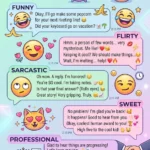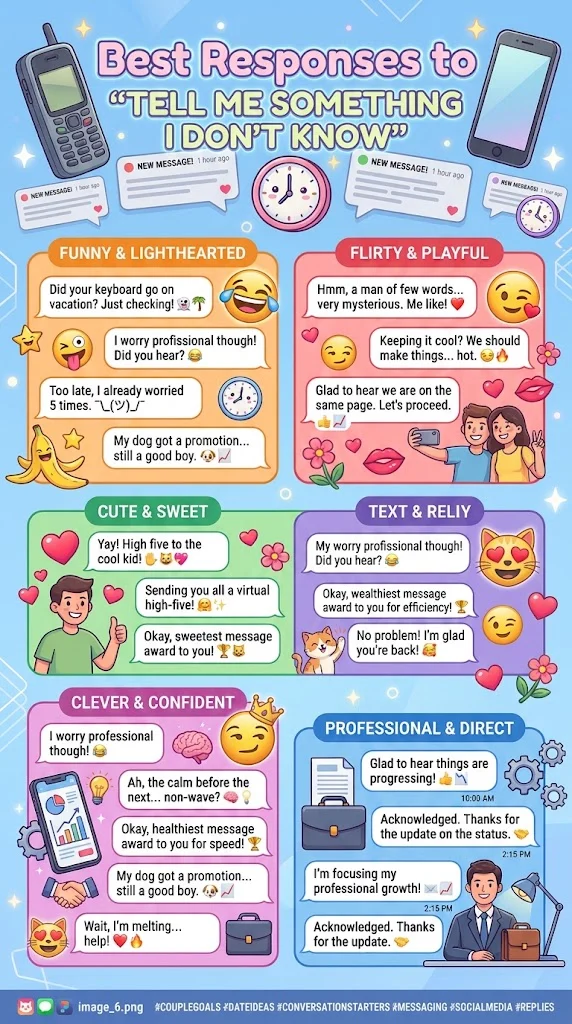
Quick Answer: The best responses to “Tell me something I don’t know” depend on whether you want to be funny, sarcastic, flirty, or genuinely interesting. You can surprise someone with a clever fact, tease them with a witty comeback, or turn the challenge into a playful conversation.
Top alternatives: “Your future is still unwritten,” “You make ordinary days interesting,” “Octopuses have three hearts,” “I’m full of surprises,” “Something you don’t know is how much I like talking to you.”
Ever had someone say, “Tell me something I don’t know,” and suddenly your mind goes completely blank? You know plenty of interesting things, but somehow, nothing comes to mind at that moment! Maybe a friend is joking around in a group chat, your crush is trying to keep the conversation going, or someone simply wants to hear something interesting. Whatever the situation, it’s a fun little challenge that gives you a chance to show off your personality.
The best responses to tell me something I don’t know don’t always have to be smart or full of facts. Sometimes, a funny comeback, a clever observation, a random piece of information, or a little flirtiness is all it takes to make someone smile. Whether you want to sound witty, playful, confident, or genuinely interesting, having a few good replies ready can make your conversations feel much more natural and enjoyable.
1. Funny Responses to “Tell Me Something I Don’t Know”
Want to make someone laugh instead of giving them a boring history lesson? These funny replies add instant entertainment to the conversation.
- Your phone battery is probably judging you.
Example: When a friend challenges you during a casual chat.
Meaning: Adds a humorous touch to an everyday situation. - I’m secretly more interesting than I look.
Example: When someone playfully questions your knowledge.
Meaning: Shows confidence through self-deprecating humor. - Your refrigerator light turns off when you close the door.
Example: When you want to share a silly observation.
Meaning: Makes an ordinary fact sound entertaining. - Somewhere, someone is having a worse Monday.
Example: When a friend wants something funny to hear.
Meaning: Uses relatable humor to lighten the mood. - I’m not Google, but I do have some interesting updates.
Example: When someone expects you to know everything.
Meaning: Playfully sets limits while keeping things fun. - Your socks have probably seen more adventures than you.
Example: During a silly conversation with friends.
Meaning: Turns an ordinary object into a funny joke. - I was born with the ability to forget why I entered a room.
Example: When someone asks for a random piece of information.
Meaning: Makes fun of a relatable human habit. - Your weekend is closer than your next vacation.
Example: When everyone is tired and needs a laugh.
Meaning: Offers a little humor about everyday life. - I’m running on snacks and questionable decisions.
Example: When chatting casually with someone familiar.
Meaning: Expresses your mood through playful exaggeration. - Even my search history needs a break.
Example: When someone expects an impressive answer.
Meaning: Jokes about how much information people search for. - You just unlocked my random-facts department.
Example: When you want to continue a playful challenge.
Meaning: Introduces your answer with a funny twist. - The person reading this is avoiding something productive.
Example: When teasing someone who is texting instead of working.
Meaning: Makes the other person part of the joke.
2. Clever Responses to “Tell Me Something I Don’t Know”
A clever response makes people pause, think, or smile. Use these replies when you want to sound sharp without trying too hard.
- The more you learn, the more you realize you don’t know.
Example: During a thoughtful conversation about knowledge.
Meaning: Highlights how learning reveals new questions. - Your perspective can change your entire reality.
Example: When someone wants an interesting thought.
Meaning: Encourages people to consider different viewpoints. - Silence can communicate more than words.
Example: During a conversation about human behavior.
Meaning: Points out the power of unspoken communication. - Not every opportunity comes with a second invitation.
Example: When discussing decisions and missed chances.
Meaning: Encourages people to recognize valuable opportunities. - Your habits quietly shape your future.
Example: When someone asks for a meaningful insight.
Meaning: Emphasizes the long-term impact of daily choices. - Being right and being wise aren’t always the same thing.
Example: During a friendly debate.
Meaning: Separates knowledge from good judgment. - The smallest details often tell the biggest stories.
Example: When discussing people or everyday experiences.
Meaning: Encourages attention to things others might overlook. - Confidence grows when you stop comparing your journey.
Example: When a friend needs a thoughtful reminder.
Meaning: Promotes self-belief and individuality. - Your attention is one of your most valuable resources.
Example: During a discussion about productivity.
Meaning: Reminds people to spend their focus wisely. - A different question can lead to a completely different answer.
Example: When someone enjoys intellectual conversations.
Meaning: Shows how perspective influences understanding. - Knowing when to listen is also a form of intelligence.
Example: During a discussion about communication.
Meaning: Values listening as much as speaking. - Sometimes the best answer is a better question.
Example: When someone challenges your thinking.
Meaning: Suggests that curiosity can be more valuable than quick answers.
3. Sarcastic Responses to “Tell Me Something I Don’t Know”
A little sarcasm can make your reply unforgettable. These options are ideal when the other person enjoys teasing and playful attitude.
- You don’t know everything? Interesting discovery.
Example: When a friend acts like a know-it-all.
Meaning: Gently teases someone about their confidence. - Breaking news: Water is wet.
Example: When someone expects you to share something obvious.
Meaning: Makes fun of the challenge itself. - I would, but I don’t want to overwhelm you.
Example: When joking with someone who enjoys sarcasm.
Meaning: Pretends your knowledge is too impressive to handle. - Your curiosity is finally showing up.
Example: When a friend rarely asks interesting questions.
Meaning: Playfully comments on their sudden interest. - You still haven’t discovered my full personality.
Example: When someone knows you quite well.
Meaning: Suggests there’s more to you than they realize. - The world doesn’t revolve around your notifications.
Example: When someone is constantly checking their phone.
Meaning: Delivers a light sarcastic observation. - I know something you don’t, but it’s classified.
Example: When you want to keep the mystery alive.
Meaning: Creates playful suspense without revealing anything. - You have officially reached today’s knowledge limit.
Example: When teasing a close friend.
Meaning: Pretends the other person cannot handle more information. - My intelligence has a subscription fee.
Example: When someone keeps demanding random facts.
Meaning: Makes knowledge sound like an exclusive service. - I was going to tell you, but the moment passed.
Example: When someone challenges you unexpectedly.
Meaning: Uses mock seriousness for comedic effect. - That’s a premium question, actually.
Example: When someone asks you to entertain them.
Meaning: Pretends your answer deserves special treatment. - Your confidence is impressive for someone asking questions.
Example: When a friend is acting overly confident.
Meaning: Adds a sharp but playful sarcastic twist.
4. Flirty Responses to “Tell Me Something I Don’t Know”
When your crush or partner sends this challenge, why not turn it into a little flirting opportunity? These replies add charm without making things too serious.
- I think you’re becoming my favorite distraction.
Example: When your crush wants to keep the conversation going.
Meaning: Shows that you enjoy their attention. - Something you don’t know? I smile whenever your name pops up.
Example: When texting someone you secretly like.
Meaning: Expresses romantic interest in a sweet way. - You’re more attractive when you’re curious.
Example: When flirting with someone who enjoys compliments.
Meaning: Combines admiration with playful teasing. - I might have a little crush on you.
Example: When you’re ready to hint at your feelings.
Meaning: Expresses attraction in a direct but gentle way. - Talking to you is becoming my favorite habit.
Example: When you regularly text your special someone.
Meaning: Shows that their presence makes you happy. - You have no idea how cute you are.
Example: When your crush is being playful.
Meaning: Gives a warm and genuine compliment. - I know a secret: I was hoping you’d text me.
Example: When someone messages you unexpectedly.
Meaning: Reveals that you were looking forward to hearing from them. - Your smile could easily become my favorite view.
Example: When flirting during a romantic conversation.
Meaning: Expresses admiration in a charming way. - I have a feeling we’re going to become something interesting.
Example: When getting to know someone romantically.
Meaning: Hints at the possibility of a deeper connection. - You make my ordinary days feel a little special.
Example: When expressing affection to someone you like.
Meaning: Shows how their presence positively affects your mood. - I don’t know about you, but I’m enjoying this chemistry.
Example: When the conversation feels mutually flirty.
Meaning: Acknowledges romantic tension. - The biggest secret? I’d rather be talking to you right now.
Example: When your crush asks for an interesting secret.
Meaning: Shows that you genuinely enjoy their company.
5. Brutally Honest Responses to “Tell Me Something I Don’t Know”
Sometimes the best reply is direct, confident, and refreshingly honest. These responses work when you want to make a point without unnecessary explanations.
- You don’t need everyone’s approval to be yourself.
Example: When someone is constantly seeking validation.
Meaning: Encourages independence and self-respect. - Not everyone who smiles at you is your friend.
Example: When discussing trust and relationships.
Meaning: Reminds someone to judge relationships by actions. - Your excuses won’t change your results.
Example: When a friend keeps postponing important goals.
Meaning: Encourages responsibility instead of excuses. - People make time for what matters to them.
Example: When discussing inconsistent communication.
Meaning: Highlights the importance of priorities. - Being available doesn’t mean being respected.
Example: When someone feels taken for granted.
Meaning: Encourages healthy boundaries. - Your comfort zone won’t introduce you to every opportunity.
Example: When someone is afraid of trying something new.
Meaning: Encourages personal growth. - You can be a good person and still say no.
Example: When someone struggles to establish boundaries.
Meaning: Reminds people that kindness doesn’t require constant agreement. - An apology without changed behavior means very little.
Example: When discussing repeated mistakes.
Meaning: Emphasizes the importance of actions. - Your opinion of me isn’t my responsibility.
Example: When someone makes unnecessary personal judgments.
Meaning: Shows emotional independence. - Time reveals what words try to hide.
Example: When discussing complicated relationships.
Meaning: Suggests that consistent actions reveal the truth. - You can miss someone and still move forward.
Example: When talking about difficult breakups.
Meaning: Shows that feelings don’t have to control your decisions. - Not every argument deserves your energy.
Example: When someone wants to avoid pointless disagreements.
Meaning: Promotes emotional maturity and peace.
6. Creative Responses to “Tell Me Something I Don’t Know”
Want to make your answer stand out? These creative replies bring imagination, curiosity, and a little unexpected charm into the conversation.
- Every sunrise is a reminder that yesterday isn’t the whole story.
Example: When sharing an inspiring thought with a friend.
Meaning: Represents fresh starts and new possibilities. - Some of the best memories begin with unplanned decisions.
Example: When discussing spontaneous adventures.
Meaning: Celebrates unexpected experiences. - Your next favorite song might be one you’ve never heard.
Example: When talking about music discoveries.
Meaning: Encourages curiosity and exploration. - A stranger today could become an important person tomorrow.
Example: When discussing new friendships.
Meaning: Highlights the unexpected nature of human connections. - Your story is still being written.
Example: When someone feels uncertain about the future.
Meaning: Encourages hope and personal growth. - Dreams sometimes begin as ideas nobody understands.
Example: When talking about ambitious goals.
Meaning: Celebrates imagination and determination. - A little curiosity can open surprisingly big doors.
Example: When someone enjoys learning new things.
Meaning: Shows the value of asking questions. - Even the moon has a different story every night.
Example: When sharing a poetic thought.
Meaning: Suggests that change is part of life. - Your future self might thank you for today’s small decisions.
Example: When encouraging someone to make better choices.
Meaning: Connects present actions with future possibilities. - The world is full of places your imagination hasn’t visited yet.
Example: When discussing travel or adventures.
Meaning: Inspires exploration and creativity. - Sometimes a random conversation becomes a favorite memory.
Example: When chatting with someone you recently met.
Meaning: Celebrates unexpected connections. - The most interesting chapters often start unexpectedly.
Example: When someone is beginning a new phase of life.
Meaning: Encourages excitement about new experiences.
7. Polite Responses to “Tell Me Something I Don’t Know”
If you want to keep things respectful and friendly, these polite replies are perfect for everyday conversations.
- I’d be happy to share something interesting.
Example: When someone politely asks you for information.
Meaning: Shows that you’re willing to participate. - Here’s a little fact you might enjoy.
Example: When sharing something educational.
Meaning: Introduces information in a friendly manner. - Let me think of something worth sharing.
Example: When you need a moment to prepare an answer.
Meaning: Shows thoughtfulness rather than rushing. - There’s always something new to learn.
Example: During a friendly discussion about knowledge.
Meaning: Expresses openness to learning. - I recently learned something quite interesting.
Example: When sharing a recent discovery.
Meaning: Creates a natural opening for information. - How about something unexpected?
Example: When you want to make the conversation engaging.
Meaning: Invites curiosity. - I’d love to share a fun fact with you.
Example: When talking with someone who enjoys interesting facts.
Meaning: Shows enthusiasm for the conversation. - That’s an interesting challenge. Let me try.
Example: When someone tests your general knowledge.
Meaning: Acknowledges their challenge positively. - I have something interesting in mind.
Example: When you already know what you want to share.
Meaning: Builds anticipation. - You might find this little detail surprising.
Example: When introducing an unusual fact.
Meaning: Encourages the other person to listen. - Let me share something I recently discovered.
Example: When discussing a new topic.
Meaning: Makes the exchange feel natural and informative. - I hope this is something new for you.
Example: When sharing a fact with a friend or colleague.
Meaning: Shows consideration for the listener.
8. Professional Responses to “Tell Me Something I Don’t Know”
In a workplace, interview, or professional discussion, your response should demonstrate curiosity, knowledge, and confidence without sounding overly casual.
- Continuous learning is essential for professional growth.
Example: During a workplace discussion about career development.
Meaning: Highlights the importance of developing new skills. - Small improvements can create meaningful long-term results.
Example: When discussing business performance.
Meaning: Emphasizes consistent progress. - Effective communication prevents many workplace misunderstandings.
Example: During a team meeting.
Meaning: Shows awareness of professional communication. - Feedback is valuable when we are willing to act on it.
Example: When discussing employee development.
Meaning: Encourages practical use of feedback. - Strong teams depend on trust as much as talent.
Example: During a conversation about teamwork.
Meaning: Recognizes the importance of collaboration. - Adaptability is an important part of career success.
Example: During an interview or professional discussion.
Meaning: Highlights flexibility in changing environments. - Good leadership starts with listening.
Example: When discussing management skills.
Meaning: Emphasizes the importance of understanding others. - Time management is really priority management.
Example: During a productivity discussion.
Meaning: Explains why choosing important tasks matters. - A clear objective makes teamwork more effective.
Example: When planning a workplace project.
Meaning: Highlights the value of shared goals. - Professional growth often begins outside your comfort zone.
Example: During a career development conversation.
Meaning: Encourages employees to embrace new challenges. - Consistency builds credibility over time.
Example: When discussing workplace performance.
Meaning: Connects reliability with professional trust. - Asking the right questions can save valuable time.
Example: During a project planning meeting.
Meaning: Shows the importance of clear communication.
9. Random Interesting Responses to “Tell Me Something I Don’t Know”
Sometimes a random fact is all you need. These responses are great for group chats, casual conversations, and people who love learning unexpected things.
- Octopuses have three hearts.
Example: When sharing an unusual animal fact.
Meaning: Introduces a surprising detail about marine life. - A day on Venus is longer than its year.
Example: When discussing interesting space facts.
Meaning: Shares an unusual fact about planetary rotation. - Bananas are berries, but strawberries aren’t botanical berries.
Example: When someone asks for a surprising food fact.
Meaning: Reveals an unexpected botanical classification. - Sharks existed before trees.
Example: When discussing prehistoric animals.
Meaning: Highlights how ancient sharks are. - Wombats produce cube-shaped poop.
Example: When you want an amusing animal fact.
Meaning: Shares an unusual detail about wombat biology. - Honey can remain edible for an incredibly long time when properly stored.
Example: During a conversation about unusual foods.
Meaning: Highlights honey’s remarkable storage properties. - Butterflies taste with their feet.
Example: When sharing a fun nature fact.
Meaning: Explains an unusual butterfly sensory ability. - The Eiffel Tower can become slightly taller in hot weather.
Example: When discussing famous landmarks.
Meaning: Explains how heat causes metal expansion. - A group of flamingos is called a flamboyance.
Example: When sharing an amusing animal-related fact.
Meaning: Introduces a colorful collective noun. - Sea otters sometimes hold hands while floating.
Example: When sharing an adorable wildlife fact.
Meaning: Describes a behavior that can help otters stay together. - The human nose can recognize an enormous variety of smells.
Example: When discussing the human body.
Meaning: Highlights the impressive ability of the sense of smell. - Some turtles can absorb oxygen through specialized tissues near their tails.
Example: When sharing unusual animal biology.
Meaning: Introduces a fascinating survival adaptation found in certain turtles.
10. Chill and Casual Responses to “Tell Me Something I Don’t Know”
Not every reply needs to be impressive. Sometimes a relaxed, effortless response is exactly what the conversation needs.
- Hmm, where should I begin?
Example: When a friend casually challenges you.
Meaning: Shows you’re ready to play along. - I’ve got a few random facts for you.
Example: When someone wants to hear something interesting.
Meaning: Opens the door to a relaxed conversation. - Okay, here’s a little something.
Example: When sharing an interesting detail.
Meaning: Keeps the exchange simple and friendly. - You might actually like this one.
Example: When sharing something related to their interests.
Meaning: Makes the other person feel included. - Let me hit you with a fun fact.
Example: When chatting with friends online.
Meaning: Introduces information in a casual way. - I’ve been waiting for someone to ask.
Example: When you have an interesting fact ready.
Meaning: Adds playful enthusiasm. - I know a thing or two.
Example: When someone underestimates your knowledge.
Meaning: Shows relaxed confidence. - Challenge accepted!
Example: When someone turns the conversation into a game.
Meaning: Shows you’re happy to participate. - Let’s see what I’ve got.
Example: When you need a moment to think.
Meaning: Keeps the interaction easygoing. - Here’s something totally random.
Example: When you want to share an unexpected fact.
Meaning: Signals a fun change of topic. - Okay, prepare for a little information.
Example: When talking with someone who enjoys random knowledge.
Meaning: Builds lighthearted anticipation. - I’ve got you. Give me a second.
Example: When someone asks you unexpectedly.
Meaning: Shows you’re willing to come up with an answer.
11. Confident Responses to “Tell Me Something I Don’t Know”
Want to show confidence without sounding arrogant? These replies balance self-assurance, personality, and a little mystery.
- I’m full of surprises.
Example: When someone wants to know more about you.
Meaning: Shows confidence and mystery. - You haven’t seen my most interesting side yet.
Example: When someone thinks they already know everything about you.
Meaning: Suggests there’s more to discover. - I know more than I usually let on.
Example: When someone underestimates your intelligence.
Meaning: Shows quiet self-confidence. - My story has a few unexpected chapters.
Example: When discussing your experiences.
Meaning: Suggests that your life is interesting and multifaceted. - I don’t need to know everything to know my worth.
Example: When someone tries to test your knowledge.
Meaning: Separates self-worth from intelligence. - Curiosity looks good on me, doesn’t it?
Example: When enjoying playful attention.
Meaning: Combines confidence with charm. - There’s always another level to discover.
Example: When someone challenges your abilities.
Meaning: Shows a willingness to keep growing. - I let my actions do most of the talking.
Example: During a conversation about your achievements.
Meaning: Communicates confidence without boasting. - I surprise myself sometimes.
Example: When sharing an unexpected achievement.
Meaning: Shows humility alongside self-belief. - You haven’t unlocked all my secrets yet.
Example: When someone wants to know more about your personality.
Meaning: Adds a confident and mysterious touch. - I bring more to the table than random facts.
Example: When someone playfully tests your intelligence.
Meaning: Shows that your personality goes beyond knowledge. - There’s always something worth discovering about me.
Example: When someone is getting to know you.
Meaning: Expresses confidence and individuality.
12. Cute Responses to “Tell Me Something I Don’t Know”
If you want to make someone smile, these adorable replies are perfect for friends, close relationships, and sweet conversations.
- You make people smile more than you realize.
Example: When replying to someone you genuinely appreciate.
Meaning: Offers a warm and thoughtful compliment. - Somewhere, a puppy is having the best day ever.
Example: When sharing something adorable and random.
Meaning: Adds a cheerful thought to the conversation. - You have a talent for making ordinary moments better.
Example: When talking to someone special.
Meaning: Shows appreciation for their personality. - The world needs more people with your kind of kindness.
Example: When complimenting a thoughtful friend.
Meaning: Recognizes their positive qualities. - I secretly enjoy our random conversations.
Example: When texting someone you like spending time with.
Meaning: Shows affection without being too serious. - Your laugh deserves its own fan club.
Example: When teasing someone about their adorable laugh.
Meaning: Gives a playful personal compliment. - You’re someone’s favorite notification.
Example: When sending a sweet message to a friend.
Meaning: Reminds someone that they are appreciated. - Tiny moments can make the biggest memories.
Example: When discussing meaningful everyday experiences.
Meaning: Celebrates simple happiness. - You deserve a day full of your favorite things.
Example: When making someone feel special.
Meaning: Expresses care and affection. - Even your silly side is lovable.
Example: When joking with someone close to you.
Meaning: Shows acceptance and warmth. - Kind hearts make the world feel softer.
Example: When complimenting someone’s caring nature.
Meaning: Appreciates kindness and compassion. - You’re a little sunshine on an ordinary day.
Example: When sending a sweet message to someone special.
Meaning: Compares their presence to something bright and uplifting.
13. Dramatic Responses to “Tell Me Something I Don’t Know”
For those moments when a simple answer just won’t do, bring a little theatrical energy into your reply.
- The truth is finally ready to reveal itself.
Example: When someone asks for a mysterious fact.
Meaning: Creates dramatic anticipation. - You are not prepared for the information I’m about to share.
Example: When teasing a friend before revealing a fact.
Meaning: Makes an ordinary answer sound important. - Some secrets are too powerful for this conversation.
Example: When you want to avoid answering directly.
Meaning: Adds playful mystery. - The plot thickens, my friend.
Example: When sharing an unexpected detail.
Meaning: Makes the conversation feel like a story. - Prepare yourself. History is about to be made.
Example: When turning a simple challenge into a joke.
Meaning: Exaggerates the importance of your answer. - I have information that could change everything.
Example: When building suspense before a funny fact.
Meaning: Creates humorous curiosity. - The universe has been waiting for this moment.
Example: When someone challenges you unexpectedly.
Meaning: Makes the situation sound hilariously important. - This knowledge comes with great responsibility.
Example: When sharing an unusual discovery.
Meaning: Adds mock seriousness to your answer. - A shocking revelation is coming your way.
Example: When you want the other person to pay attention.
Meaning: Builds excitement around your response. - I wasn’t going to reveal this, but here we are.
Example: When sharing a playful secret.
Meaning: Creates the feeling of an exclusive revelation. - Let the record show that I warned you.
Example: When preparing someone for an unexpected fact.
Meaning: Adds theatrical humor. - And now, the truth shall be revealed.
Example: When responding to a playful challenge.
Meaning: Turns a simple answer into a dramatic moment.
14. Emotional and Meaningful Responses to “Tell Me Something I Don’t Know”
Sometimes the most memorable response isn’t funny or clever. It’s something meaningful that makes someone think about life, relationships, and personal growth.
- You are stronger than the moments that tested you.
Example: When a friend needs encouragement.
Meaning: Reminds someone of their resilience. - Your presence matters more than you realize.
Example: When comforting someone who feels unappreciated.
Meaning: Reassures them that they are valuable. - Not every ending is a loss.
Example: When someone is struggling with change.
Meaning: Encourages a positive perspective on new beginnings. - You can start over without explaining yourself to everyone.
Example: When discussing personal decisions.
Meaning: Supports independence and fresh starts. - Healing doesn’t always happen in a straight line.
Example: When someone is working through difficult experiences.
Meaning: Normalizes the ups and downs of personal growth. - Your kindness can stay in someone’s memory for years.
Example: When discussing meaningful relationships.
Meaning: Highlights the lasting impact of thoughtful actions. - You don’t have to be perfect to be loved.
Example: When reassuring someone who doubts themselves.
Meaning: Promotes self-acceptance. - Some of your quietest victories are your biggest achievements.
Example: When someone feels their progress is unnoticed.
Meaning: Recognizes personal achievements that others might not see. - It’s okay to outgrow things that once made you happy.
Example: When discussing changes in priorities.
Meaning: Accepts personal development. - Your worth doesn’t decrease because someone failed to recognize it.
Example: When comforting a friend after rejection.
Meaning: Encourages healthy self-esteem. - You deserve the same kindness you give to others.
Example: When someone constantly puts others first.
Meaning: Reminds them to care for themselves. - Sometimes choosing peace is the bravest decision.
Example: When discussing difficult personal choices.
Meaning: Values emotional well-being over unnecessary conflict.
15. Witty Comebacks to “Tell Me Something I Don’t Know”
These responses combine intelligence, humor, and a little attitude. They’re perfect when you want to leave someone smiling and thinking about your reply.
- I know something you don’t, and so does everyone else.
Example: When responding to a playful challenge.
Meaning: Uses an unexpected twist to create humor. - Your curiosity is doing a great job today.
Example: When a friend keeps asking questions.
Meaning: Compliments their interest in a witty way. - The best conversations begin with better questions.
Example: When someone wants an interesting discussion.
Meaning: Encourages curiosity and meaningful communication. - I’m about to upgrade your knowledge subscription.
Example: When sharing an unusual fact with a friend.
Meaning: Makes learning sound entertaining. - You know what? Even I surprise myself.
Example: When someone expects an impressive answer.
Meaning: Shows humor and confidence together. - Something you don’t know is that I’m excellent at keeping secrets.
Example: When someone asks for personal information.
Meaning: Creates playful mystery. - The answer depends on how much information you can handle.
Example: When joking with a curious friend.
Meaning: Pretends your knowledge comes in different levels. - I could tell you, but then we’d need a whole podcast.
Example: When you have too much to explain.
Meaning: Exaggerates how interesting your information is. - Your question just made my brain open another tab.
Example: When someone catches you off guard.
Meaning: Uses a modern internet reference to describe thinking. - I have facts, but my delivery is still loading.
Example: When you need time to think of a reply.
Meaning: Makes your hesitation sound funny. - The interesting part is that you asked the right person.
Example: When showing confidence during a conversation.
Meaning: Suggests you’re ready to share something valuable. - Let’s just say your knowledge is about to get an update.
Example: When introducing a new piece of information.
Meaning: Makes learning sound like a fun upgrade.
FAQs
What Does “Tell Me Something I Don’t Know” Mean?
It means someone wants you to share a new fact, interesting detail, secret, or surprising piece of information.
Is “Tell Me Something I Don’t Know” Flirty?
It can be flirty when someone uses it to start playful conversation or encourage you to reveal something personal.
How Do You Respond to “Tell Me Something I Don’t Know” Professionally?
Share a relevant industry fact, workplace insight, or useful observation in a clear and respectful tone.
What If I Don’t Actually Know Anything Interesting?
Say, “Give me a second, I’m searching my mental library!” or simply ask them to share something first.
Is Humor Appropriate When Someone Says This?
Yes! Humor works perfectly with friends, crushes, and casual conversations when the other person enjoys playful exchanges.
What Is a Clever Reply to “Tell Me Something I Don’t Know”?
Try “The more you learn, the more you realize how much you don’t know.” It’s thoughtful and memorable.
How Do You Respond to This Phrase From Your Crush?
Try “Something you don’t know? I was hoping you’d text me.” It’s sweet, direct, and flirty.
Can You Answer With a Random Fact?
Absolutely! A surprising fact about animals, space, food, or science makes a great response.
How Do You Reply Without Sounding Arrogant?
Keep your answer friendly, share something useful, and avoid making the conversation about proving your intelligence.
What If Someone Is Being Sarcastic?
Match their energy with a light comeback like “I know, that’s a rare opportunity for you!”
Conclusion
Finding the best responses to tell me something I don’t know doesn’t have to feel like taking an unexpected exam. Whether you choose a funny comeback, a clever observation, a flirty message, or a fascinating random fact, the right response can make any conversation more enjoyable. Remember, you don’t always need the smartest answer to leave a lasting impression.
Sometimes, a little humor, confidence, or genuine curiosity is more than enough. Try different replies depending on who you’re talking to and the mood of the moment. Save this list for your next interesting conversation, share your favorite responses with friends, and never let a good comeback go to waste!