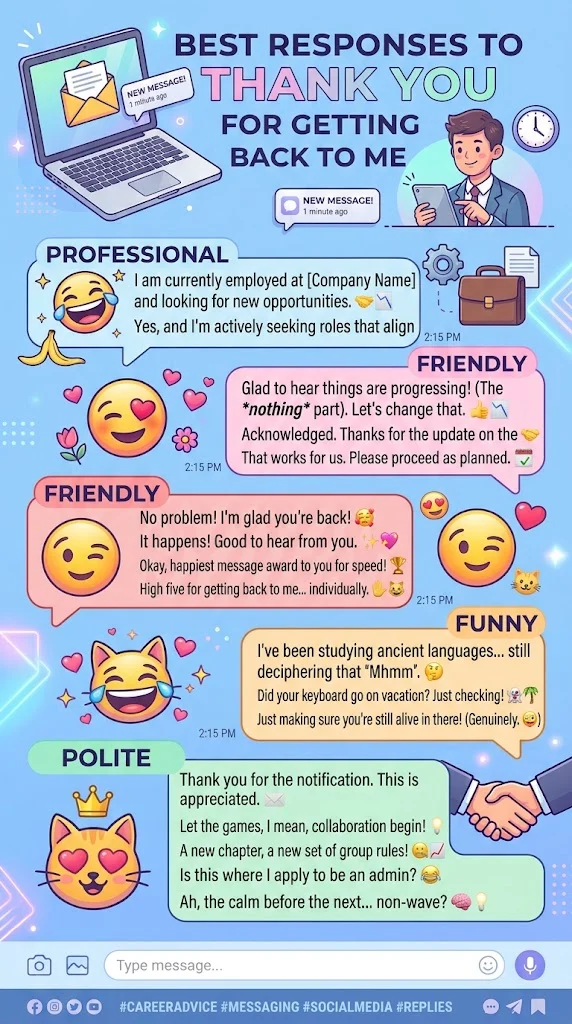
Quick Answer: The best responses to “Thank you for getting back to me” are polite, friendly, and natural. Whether you’re replying to a coworker, client, friend, or someone in a text conversation, a simple acknowledgment can keep things positive and comfortable.
Top alternatives: “You’re very welcome!”, “Happy to help!”, “Of course, anytime!”, “No problem at all!”, “Glad I could get back to you!”
Getting back to someone’s message might seem like a small thing, but it’s always nice when people appreciate the effort. You might receive a “Thank you for getting back to me” after replying to a work email, answering a friend’s question, responding to a customer, or finally catching up on a message you’ve been meaning to answer. It’s a polite and common phrase, but figuring out what to say next isn’t always as easy as it sounds. Do you simply say “You’re welcome,” add a little friendliness, or keep the conversation going? Sometimes even the simplest replies can leave you wondering what sounds right.
The good news is that you don’t need a perfectly worded response every time someone thanks you. A little appreciation, a friendly acknowledgment, or a simple follow-up can keep the conversation flowing naturally. The best responses to thank you for getting back to me depend on who you’re talking to and the situation. Whether you’re replying to a coworker, client, friend, or someone you’ve just started chatting with, these responses will give you plenty of easy, natural ways to answer without sounding stiff, overly formal, or repetitive.
1. Professional Responses to Thank You for Getting Back to Me
When replying to a client, manager, colleague, or business contact, it’s best to keep things polite, clear, and professional.
- You’re very welcome. Happy to assist!
Example: Use it when a client appreciates your response to their inquiry.
Meaning: You are politely acknowledging their gratitude and offering support. - My pleasure. Please let me know if you need anything else.
Example: Use it after answering a customer’s question.
Meaning: You are showing willingness to provide further assistance. - You’re welcome. I’m glad I could help.
Example: Use it when a coworker thanks you for clarifying something.
Meaning: You are expressing satisfaction that your response was useful. - Certainly. I’m happy we could connect.
Example: Use it after responding to a business inquiry.
Meaning: You appreciate the opportunity to communicate. - Thank you for your patience.
Example: Use it when someone waited for your response.
Meaning: You acknowledge their understanding and time. - I’m pleased I could get back to you.
Example: Use it when replying to a formal email.
Meaning: You are professionally acknowledging their appreciation. - Of course. Please feel free to reach out anytime.
Example: Use it when responding to a professional contact.
Meaning: You are keeping communication open. - You’re most welcome. I appreciate your understanding.
Example: Use it when someone waited for an update.
Meaning: You recognize their patience and cooperation. - Happy to provide the information you needed.
Example: Use it after sending requested details.
Meaning: You are glad your response addressed their needs. - Absolutely. I’m always happy to assist.
Example: Use it when a colleague appreciates your support.
Meaning: You are communicating a helpful and professional attitude. - Thank you for following up. I’m glad we got this sorted out.
Example: Use it after resolving a business matter.
Meaning: You appreciate their follow-up and the progress made. - You’re welcome. I look forward to staying in touch.
Example: Use it when responding to a business connection.
Meaning: You are encouraging continued professional communication.
2. Polite Responses to Thank You for Getting Back to Me
Sometimes a simple and respectful reply is all you need. These responses work well with acquaintances, customers, colleagues, and everyday contacts.
- You’re very welcome!
Example: Use it when someone thanks you for replying to their message.
Meaning: You are warmly accepting their gratitude. - No problem at all!
Example: Use it when someone appreciates your quick response.
Meaning: You are letting them know that replying was no trouble. - Of course, happy to help!
Example: Use it when someone thanks you for sharing information.
Meaning: You are showing a friendly willingness to assist. - It was my pleasure!
Example: Use it after helping someone with a request.
Meaning: You are expressing genuine appreciation for helping. - Not a problem. Glad we connected!
Example: Use it when replying to someone after a conversation.
Meaning: You are keeping the interaction positive. - You’re welcome, anytime!
Example: Use it when someone appreciates your response.
Meaning: You are making yourself approachable. - Happy to get back to you!
Example: Use it when someone thanks you for replying.
Meaning: You are acknowledging their gratitude warmly. - Certainly, no worries!
Example: Use it during a polite everyday exchange.
Meaning: You are reassuring them that everything is fine. - Glad I could respond in time!
Example: Use it when someone needed a timely answer.
Meaning: You are pleased your reply was useful. - You’re welcome, and thank you for reaching out!
Example: Use it when someone contacts you with a question.
Meaning: You appreciate their initiative. - Always happy to help where I can!
Example: Use it when someone appreciates your assistance.
Meaning: You are expressing a helpful attitude. - Of course, I appreciate your message!
Example: Use it when replying to a respectful contact.
Meaning: You are returning their politeness.
3. Friendly Responses to Thank You for Getting Back to Me
When you’re talking to friends, familiar coworkers, or people you enjoy chatting with, a relaxed response can make the conversation feel more natural.
- Of course! No worries at all.
Example: Use it when a friend thanks you for replying.
Meaning: You are casually reassuring them. - Anytime, happy to hear from you!
Example: Use it when someone you know reaches out.
Meaning: You enjoy staying connected. - You’re always welcome!
Example: Use it when a friend appreciates your response.
Meaning: You are expressing warmth and familiarity. - Glad we could catch up!
Example: Use it after reconnecting with an old friend.
Meaning: You appreciate having the chance to talk. - No big deal, it’s all good!
Example: Use it during a casual text exchange.
Meaning: You are showing that replying was easy. - Happy to hear from you anytime!
Example: Use it when someone apologizes for messaging you.
Meaning: You are making them feel welcome. - Of course, what’s next?
Example: Use it when you want to keep the conversation going.
Meaning: You are showing interest in continuing the discussion. - Glad I could get back to you!
Example: Use it when someone thanks you for responding.
Meaning: You are acknowledging their appreciation casually. - You know I’m always around!
Example: Use it with someone you’re close to.
Meaning: You are showing availability and familiarity. - All good, hope you’re doing well!
Example: Use it when replying to someone after a busy day.
Meaning: You are adding a friendly personal touch. - Of course, don’t mention it!
Example: Use it when a friend makes a big deal of your reply.
Meaning: You are saying they don’t need to thank you. - Always nice hearing from you!
Example: Use it when someone you like chatting with reaches out.
Meaning: You value the connection.
4. Short and Simple Responses to Thank You for Getting Back to Me
If you don’t want to overthink a reply, these short options are perfect for quick messages, emails, and everyday conversations.
- You’re welcome!
Example: Use it for a simple text reply.
Meaning: You politely accept their thanks. - Anytime!
Example: Use it when a friend appreciates your response.
Meaning: You are happy to help whenever needed. - No worries!
Example: Use it during casual conversations.
Meaning: You are reassuring them that everything is fine. - Of course!
Example: Use it when someone thanks you for replying.
Meaning: You consider responding a natural thing to do. - Happy to help!
Example: Use it after answering someone’s question.
Meaning: You are glad your response was useful. - My pleasure!
Example: Use it in a polite conversation.
Meaning: You genuinely don’t mind helping. - Absolutely!
Example: Use it when acknowledging someone’s appreciation.
Meaning: You are responding positively and confidently. - Glad to help!
Example: Use it after providing useful information.
Meaning: You are pleased you could assist. - Not at all!
Example: Use it when someone thanks you for taking the time to respond.
Meaning: You are saying it wasn’t an inconvenience. - Sure thing!
Example: Use it with a familiar contact.
Meaning: You are casually acknowledging their thanks. - All good!
Example: Use it in a relaxed text exchange.
Meaning: You are keeping the interaction easygoing. - You got it!
Example: Use it when someone appreciates your help.
Meaning: You are responding with friendly confidence.
5. Funny Responses to Thank You for Getting Back to Me
Want to add a little humor to the conversation? These funny replies are great for friends and people who appreciate a playful sense of humor.
- I finally escaped my notification cave!
Example: Use it when replying after being away from your phone.
Meaning: You are joking about taking time to respond. - Better late than never, right?
Example: Use it when someone thanks you for a delayed reply.
Meaning: You are laughing off the wait. - My thumbs deserve a thank-you too!
Example: Use it when joking about typing a long response.
Meaning: You are playfully celebrating your texting effort. - Look at me being all responsible!
Example: Use it when you finally answer an important message.
Meaning: You are making fun of your own productivity. - Breaking news: I actually replied!
Example: Use it when a friend knows you are slow at texting.
Meaning: You are turning your response into a joke. - I had to consult my calendar first!
Example: Use it when joking about your busy schedule.
Meaning: You are exaggerating how occupied you are. - The reply department is officially open!
Example: Use it when returning to an old conversation.
Meaning: You are joking about finally being available. - Your message survived the inbox chaos!
Example: Use it when responding to someone after a busy day.
Meaning: You are humorously describing a crowded inbox. - I came, I saw, I replied!
Example: Use it when you want a playful response.
Meaning: You are celebrating the successful completion of a simple task. - Please hold your applause!
Example: Use it when a friend makes a big deal of your reply.
Meaning: You are jokingly acting like a celebrity. - My Wi-Fi and I finally made peace!
Example: Use it when a delayed response involved internet problems.
Meaning: You are humorously blaming technical difficulties. - Customer service is always open!
Example: Use it when joking with a friend who regularly asks for help.
Meaning: You are playfully presenting yourself as their support team.
6. Warm and Sweet Responses to Thank You for Getting Back to Me
If you want your reply to feel thoughtful and genuine, these sweet responses are perfect for showing that you value the other person.
- You’re always worth a reply!
Example: Use it when someone special appreciates your response.
Meaning: You are showing that their messages matter to you. - I’m always happy to hear from you!
Example: Use it when responding to someone you care about.
Meaning: You genuinely enjoy their company. - Of course, I hope everything is going well!
Example: Use it when checking in with a friend.
Meaning: You are showing interest in their well-being. - You never have to thank me for that!
Example: Use it when someone close appreciates your reply.
Meaning: You want them to feel comfortable contacting you. - I’m glad we got a chance to talk!
Example: Use it after reconnecting with someone.
Meaning: You value the opportunity to communicate. - It was lovely hearing from you!
Example: Use it when someone reaches out after a long time.
Meaning: You appreciate reconnecting. - Always here if you need me!
Example: Use it when replying to someone who needs support.
Meaning: You are offering reassurance and availability. - I hope my reply helped a little!
Example: Use it after giving someone advice.
Meaning: You genuinely care about being helpful. - Your message was worth making time for!
Example: Use it when someone important thanks you.
Meaning: You are showing that you prioritize their communication. - Never hesitate to reach out!
Example: Use it when someone feels hesitant about messaging you.
Meaning: You want to make future communication comfortable. - I’m just happy we could connect!
Example: Use it after a meaningful conversation.
Meaning: You appreciate the connection. - Sending you good vibes, always!
Example: Use it when responding to a thoughtful friend.
Meaning: You are returning their kindness and positivity.
7. Casual Text Responses to Thank You for Getting Back to Me
For WhatsApp, Instagram DMs, and everyday texting, these responses sound relaxed and effortless.
- Ofc, no problem!
Example: Use it when replying to a friend’s casual message.
Meaning: You are acknowledging their thanks informally. - Np at all!
Example: Use it in a quick text exchange.
Meaning: You are saying there was no inconvenience. - Anytime, haha!
Example: Use it when a friend thanks you for a simple reply.
Meaning: You are keeping things light and friendly. - All good on my end!
Example: Use it when someone worries about bothering you.
Meaning: You are reassuring them that everything is fine. - Haha, you’re welcome!
Example: Use it when a conversation has a playful tone.
Meaning: You are accepting their gratitude casually. - No stress at all!
Example: Use it when someone apologizes for following up.
Meaning: You are telling them not to worry. - Got you!
Example: Use it when someone thanks you for helping them.
Meaning: You are showing friendly support. - For sure!
Example: Use it when responding to someone you know well.
Meaning: You are casually agreeing and acknowledging them. - You know it!
Example: Use it during a friendly exchange.
Meaning: You are showing familiarity and confidence. - No biggie!
Example: Use it when someone thanks you for replying.
Meaning: You are making the situation feel effortless. - Glad I caught your message!
Example: Use it when responding after being busy.
Meaning: You are happy you got a chance to reply. - We’re good!
Example: Use it when someone apologizes for following up.
Meaning: You are reassuring them that there is no issue.
8. Responses to Thank You for Getting Back to Me After a Delay
If you took longer than expected to reply, acknowledging the wait can make your response feel more considerate and genuine.
- Thanks for being patient with me!
Example: Use it when someone waited several days for your response.
Meaning: You appreciate their patience. - Sorry for the delay, and thanks for understanding!
Example: Use it when replying to an overdue email.
Meaning: You acknowledge the delay and value their understanding. - I appreciate you giving me some time!
Example: Use it when someone waited for an important update.
Meaning: You recognize their flexibility. - Glad I finally got a chance to respond!
Example: Use it after a busy week.
Meaning: You are relieved to reconnect. - Thanks for following up and staying in touch!
Example: Use it when someone sends a reminder.
Meaning: You appreciate their continued communication. - I know that took longer than expected. Thanks for waiting!
Example: Use it when responding to a delayed request.
Meaning: You take responsibility for the wait. - Better late than never, and I appreciate your patience!
Example: Use it when the other person is relaxed about the delay.
Meaning: You acknowledge the late reply with a friendly tone. - Thanks for bearing with me!
Example: Use it when someone has waited for your answer.
Meaning: You appreciate their understanding. - I didn’t mean to keep you waiting!
Example: Use it when you want to acknowledge a slow response.
Meaning: You show consideration for their time. - I’m glad we could finally connect!
Example: Use it after several missed messages.
Meaning: You appreciate finally having a conversation. - Thank you for your understanding. I appreciate it!
Example: Use it in a delayed professional email.
Meaning: You are expressing sincere gratitude. - Thanks for sticking around!
Example: Use it when a friend waits for your response.
Meaning: You appreciate their patience and continued interest.
9. Confident Responses to Thank You for Getting Back to Me
These replies are straightforward, self-assured, and positive. They’re useful when you want to acknowledge gratitude without sounding overly apologetic.
- Absolutely, communication matters!
Example: Use it when someone appreciates your timely response.
Meaning: You value clear communication. - Of course, I believe in following through!
Example: Use it when replying to a professional contact.
Meaning: You take your commitments seriously. - Happy to keep things moving!
Example: Use it when responding to a work-related update.
Meaning: You are focused on making progress. - That’s what good communication is all about!
Example: Use it when someone appreciates your response.
Meaning: You believe communication should be consistent. - No problem, I like keeping things clear!
Example: Use it when answering an important question.
Meaning: You value clarity and transparency. - Of course, I take my messages seriously!
Example: Use it when someone thanks you for responding.
Meaning: You consider communication important. - Glad we got everything on the same page!
Example: Use it after resolving confusion.
Meaning: You appreciate reaching a shared understanding. - Always good to close the loop!
Example: Use it after responding to a pending email.
Meaning: You value completing conversations and tasks. - I believe in getting back to people!
Example: Use it when discussing communication habits.
Meaning: You prioritize being responsive. - Happy to keep the conversation productive!
Example: Use it during a work discussion.
Meaning: You want communication to remain useful. - Of course, I like getting things sorted!
Example: Use it after providing an update.
Meaning: You are comfortable taking initiative. - Glad I could make things easier!
Example: Use it when someone appreciates your assistance.
Meaning: You are confident about your contribution.
10. Sarcastic Responses to Thank You for Getting Back to Me
A little sarcasm can be funny when the other person knows your personality. Keep these replies for friendly conversations rather than serious business situations.
- Look at me being punctual for once!
Example: Use it when you normally reply late.
Meaning: You are joking about your texting habits. - A reply? From me? What a surprise!
Example: Use it when a friend knows you are difficult to reach.
Meaning: You are making fun of your own communication style. - I do occasionally check my messages!
Example: Use it when someone thanks you for replying.
Meaning: You are joking about ignoring notifications. - Don’t get used to this level of service!
Example: Use it with a friend who frequently asks for help.
Meaning: You are playfully pretending to be unavailable. - My inbox and I had a serious discussion!
Example: Use it when replying after a long delay.
Meaning: You are joking about managing your messages. - The stars finally aligned!
Example: Use it when you finally find time to respond.
Meaning: You are exaggerating how difficult it was to reply. - I know, I’m full of surprises!
Example: Use it when a friend is surprised by your quick response.
Meaning: You are confidently joking about yourself. - Try not to faint from the excitement!
Example: Use it when someone makes a big deal of your reply.
Meaning: You are playfully exaggerating their reaction. - Your patience has finally been rewarded!
Example: Use it after keeping someone waiting.
Meaning: You are joking about the delayed response. - I deserve a little credit for this reply!
Example: Use it when joking with a close friend.
Meaning: You are playfully celebrating your effort. - The response team worked overtime!
Example: Use it when replying after a busy day.
Meaning: You are making a joke about your availability. - Don’t worry, the reply wasn’t a limited edition!
Example: Use it when someone jokes about your slow texting.
Meaning: You are suggesting they can expect more replies.
11. Responses to Thank You for Getting Back to Me in an Email
Email replies often need a slightly more polished tone. These options are suitable for work, customer service, business inquiries, and formal communication.
- You’re welcome. Please don’t hesitate to contact me again.
Example: Use it when responding to a customer’s email.
Meaning: You are offering continued assistance. - I’m glad I could provide the clarification you needed.
Example: Use it after explaining a confusing detail.
Meaning: You are pleased your response was helpful. - It’s my pleasure. Thank you for reaching out.
Example: Use it when replying to a business inquiry.
Meaning: You appreciate the opportunity to communicate. - You’re most welcome. I’m happy to assist further if needed.
Example: Use it when a client thanks you for an update.
Meaning: You are keeping the door open for additional support. - Thank you for your message. I’m glad we could connect.
Example: Use it after a professional email exchange.
Meaning: You appreciate the communication. - Certainly. Please let me know if you have any further questions.
Example: Use it when responding to a colleague’s inquiry.
Meaning: You are inviting further discussion. - Happy to help. I appreciate your follow-up.
Example: Use it after receiving a reminder email.
Meaning: You acknowledge their communication positively. - You’re welcome. I’m pleased we could resolve this.
Example: Use it after handling a customer concern.
Meaning: You are satisfied with the outcome. - It’s always a pleasure to assist.
Example: Use it when replying to a returning client.
Meaning: You are expressing professional warmth. - I’m glad my response was helpful. Thank you for your patience.
Example: Use it after answering a delayed inquiry.
Meaning: You appreciate their understanding. - You’re welcome. I appreciate the opportunity to assist you.
Example: Use it in a formal business exchange.
Meaning: You value the professional interaction. - My pleasure. Wishing you a productive day ahead.
Example: Use it when closing a professional email.
Meaning: You are ending the exchange on a positive note.
12. Responses to Thank You for Getting Back to Me From a Client
When a client appreciates your response, your reply should make them feel valued while maintaining a helpful and professional relationship.
- You’re welcome. Your satisfaction is important to us!
Example: Use it when a customer thanks you for resolving an issue.
Meaning: You prioritize their experience. - Happy to assist with your request!
Example: Use it after providing requested information.
Meaning: You are pleased to support their needs. - Thank you for choosing to work with us!
Example: Use it when a client appreciates your communication.
Meaning: You value their business relationship. - We’re glad we could help!
Example: Use it when replying on behalf of a business.
Meaning: You are acknowledging their gratitude professionally. - Please reach out whenever you need assistance!
Example: Use it after handling a client question.
Meaning: You are offering continued support. - Your feedback and questions are always welcome!
Example: Use it when a client appreciates your detailed response.
Meaning: You encourage open communication. - It’s our pleasure to support you!
Example: Use it when a customer thanks your team.
Meaning: You are expressing a service-oriented attitude. - I’m glad we could provide the information you needed!
Example: Use it after answering a client inquiry.
Meaning: You are satisfied with helping them. - We appreciate your time and understanding!
Example: Use it when a client waited for an update.
Meaning: You value their patience. - Thank you for your continued trust!
Example: Use it when responding to a regular customer.
Meaning: You appreciate their ongoing relationship. - I’m always happy to help make things easier for you!
Example: Use it when providing ongoing client support.
Meaning: You want their experience to be smooth. - Please let us know how else we can assist!
Example: Use it when closing a customer service conversation.
Meaning: You remain available for additional needs.
13. Responses to Thank You for Getting Back to Me After a Follow-Up
When someone has sent multiple messages or reminders, a considerate response helps maintain a positive relationship.
- Thanks for checking in. I’m glad we connected!
Example: Use it after someone follows up on an unanswered message.
Meaning: You appreciate their effort to reconnect. - I appreciate the reminder!
Example: Use it when someone follows up about a pending task.
Meaning: You acknowledge their helpful follow-up. - Thanks for your patience while I got everything together!
Example: Use it when a response required extra preparation.
Meaning: You appreciate their understanding. - Glad you reached out again!
Example: Use it when someone sends a second message.
Meaning: You welcome their continued communication. - Thanks for keeping this on my radar!
Example: Use it when a colleague reminds you about something important.
Meaning: You appreciate the reminder. - I appreciate you following up with me!
Example: Use it after responding to a business inquiry.
Meaning: You recognize their initiative. - Thanks for not letting this slip through the cracks!
Example: Use it when someone reminds you about a pending issue.
Meaning: You appreciate their attention to detail. - I’m glad we could get back on track!
Example: Use it after a delayed conversation resumes.
Meaning: You are happy progress is happening again. - Thanks for staying on top of things!
Example: Use it when a colleague follows up responsibly.
Meaning: You recognize their organization. - I appreciate you giving me another chance to respond!
Example: Use it when someone follows up after a long wait.
Meaning: You are grateful for their patience. - Thanks for bringing this back to my attention!
Example: Use it when a reminder helps you address something.
Meaning: You appreciate their initiative. - Happy we got this moving again!
Example: Use it when a follow-up leads to progress.
Meaning: You are pleased the conversation has resumed.
14. Clever and Thoughtful Responses to Thank You for Getting Back to Me
If you want your reply to sound a little more polished and memorable, these thoughtful responses strike a nice balance between friendliness and confidence.
- Good conversations deserve good follow-ups!
Example: Use it after a meaningful discussion.
Meaning: You value staying connected. - Clear communication makes everything easier!
Example: Use it during a work-related exchange.
Meaning: You believe communication helps avoid confusion. - Always better to keep the conversation going!
Example: Use it when someone appreciates your response.
Meaning: You enjoy maintaining open communication. - A good connection is worth keeping!
Example: Use it when responding to someone you value.
Meaning: You appreciate the relationship. - I’m glad we didn’t leave this unanswered!
Example: Use it when resolving an ongoing discussion.
Meaning: You value following through. - It’s always good to close the communication loop!
Example: Use it after completing a work discussion.
Meaning: You appreciate clear and complete communication. - A little follow-up goes a long way!
Example: Use it when someone thanks you for replying.
Meaning: You recognize the importance of staying in touch. - Good timing makes a difference!
Example: Use it when your response arrives at the right moment.
Meaning: You appreciate the value of timely communication. - I’m glad we could keep things moving forward!
Example: Use it after exchanging important updates.
Meaning: You are focused on progress. - Communication is always a two-way street!
Example: Use it when someone appreciates your response.
Meaning: You value mutual effort in conversations. - It’s nice when messages turn into meaningful conversations!
Example: Use it when reconnecting with someone.
Meaning: You appreciate genuine communication. - Always happy to keep good communication flowing!
Example: Use it when responding to a regular contact.
Meaning: You encourage an open and positive exchange.
15. Responses to Thank You for Getting Back to Me When You Want to Keep the Conversation Going
Sometimes you don’t want the conversation to end with a simple thank-you. These replies naturally open the door to more discussion.
- Of course! How have things been going with you?
Example: Use it when reconnecting with an old friend.
Meaning: You are showing interest in their life. - Anytime! So, what happened next?
Example: Use it when discussing an ongoing situation.
Meaning: You want to hear more details. - Happy to help! Is there anything else on your mind?
Example: Use it when someone needs advice.
Meaning: You are inviting them to continue sharing. - No worries! What have you been up to lately?
Example: Use it when restarting a casual conversation.
Meaning: You want to catch up. - Of course! Tell me how everything worked out.
Example: Use it when someone previously shared a problem.
Meaning: You care about the outcome. - Glad we connected! How’s your day going?
Example: Use it when chatting with a friend.
Meaning: You are keeping the interaction friendly. - Always happy to chat. What’s new with you?
Example: Use it when someone you enjoy talking to messages you.
Meaning: You are encouraging further conversation. - You’re welcome! Let’s catch up properly sometime.
Example: Use it when reconnecting with someone after a long time.
Meaning: You are suggesting a longer conversation. - Of course! Did you get everything figured out?
Example: Use it after helping someone with a question.
Meaning: You want to know whether they found a solution. - No problem! I’d love to hear more about it.
Example: Use it when someone shares an interesting update.
Meaning: You are showing genuine curiosity. - Happy to hear from you! What’s happening on your side?
Example: Use it when talking to someone you haven’t contacted recently.
Meaning: You want to learn about their current situation. - Anytime! Let’s keep in touch.
Example: Use it when ending a pleasant conversation.
Meaning: You want to maintain the connection.
FAQs
What does “Thank you for getting back to me” mean?
It means someone appreciates that you replied, responded to their inquiry, or provided an update.
What is the best response to “Thank you for getting back to me”?
“You’re very welcome!” is a simple, polite, and natural response for most situations.
How do you respond professionally to this phrase?
Say, “You’re welcome. I’m happy to assist further if needed.”
Is “No problem” a good response?
Yes, “No problem” works well in casual conversations and friendly workplace exchanges.
What if someone thanks you for replying late?
Say, “Thanks for your patience. I appreciate your understanding!”
Can you respond with “My pleasure”?
Absolutely! It’s a polite and professional way to acknowledge someone’s gratitude.
How do you respond to this phrase in an email?
Try “You’re welcome. Please feel free to reach out if you need anything else.”
Is “Anytime” too casual for work?
It depends on your workplace, but “Happy to help anytime” sounds more professional.
Should you apologize for a delayed response?
Yes, if the delay caused inconvenience, briefly acknowledge it and thank them for waiting.
Can you use a funny response?
Yes! Funny replies work best with friends and people who understand your sense of humor.
Conclusion
Finding the right response to “Thank you for getting back to me” doesn’t have to be complicated. Sometimes a simple “You’re welcome” is perfect, while other situations call for a more thoughtful, professional, or playful reply. The key is understanding who you’re talking to and matching your response to the situation.
A small acknowledgment can make your emails feel more professional, your texts more friendly, and your everyday conversations more enjoyable. So, save these responses for the next time someone appreciates your reply, share your favorites with friends, and feel free to make them your own. Good communication starts with simple, thoughtful words!